
The other day I was trying to explain some of the more practical points about autistic behavior to people who work in schools but do not have a lot of interaction with autistic kids during their day (the event leading up to that particular conversation is the topic of a post to be named later). These folks should know more, they should interact with the kids more, but they don’t. On some level, there is only so much you can expect from the uninitiated – there are lots of disabilities and syndromes that I don’t understand because I don’t live with or near them. Most of the time, you learn because you have to; you learn because someone shows you.
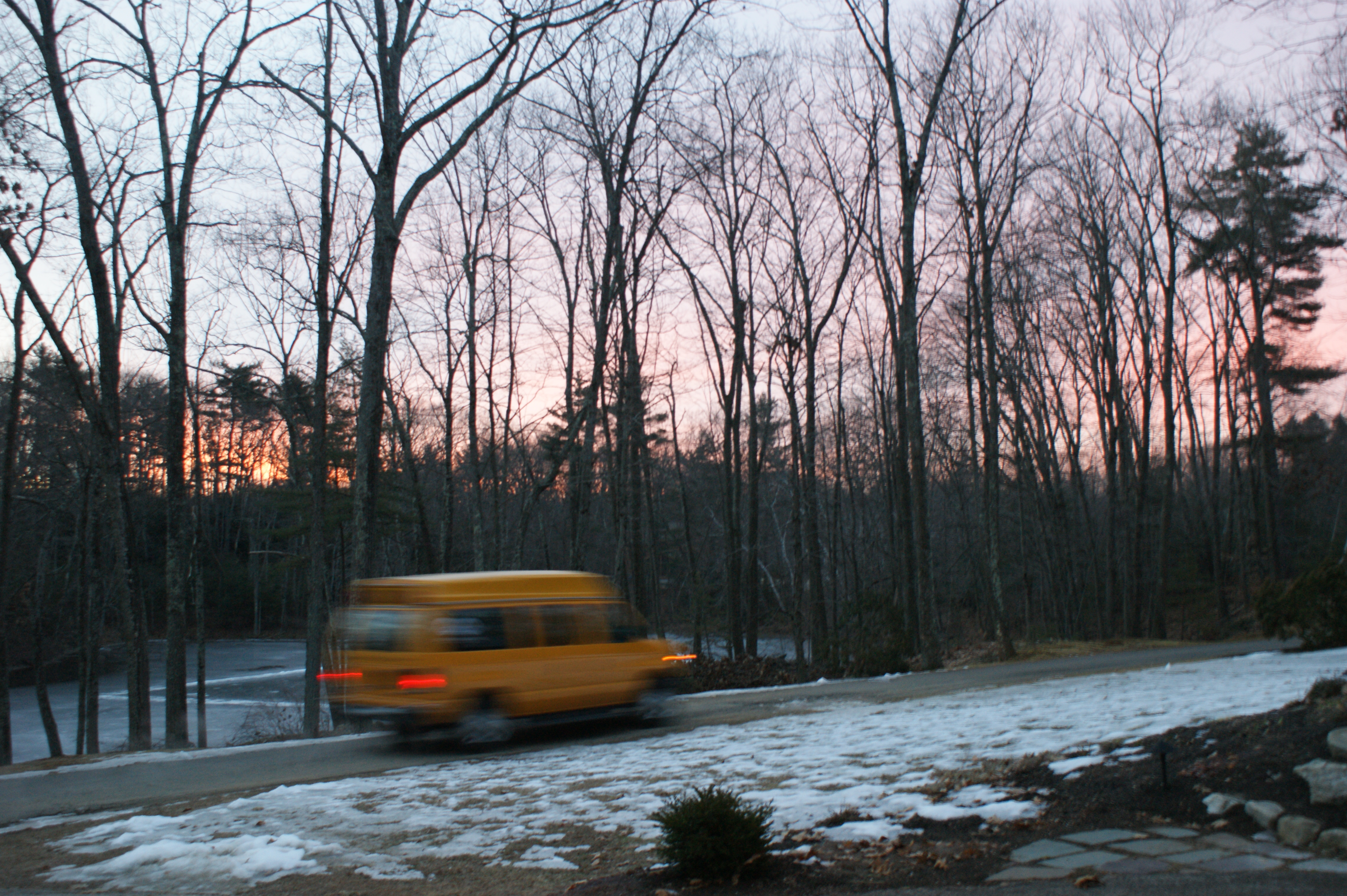 During our first years of marriage we lived in a town near Boston in a little house on a quiet street. Across the street live Sergei and his wife and their two or three children; I can’t recall how many of them there were, but each morning he would stand outside and wait for a school van to come and pick up his daughter, who must have been 12 or 13. Sergei was big and square with a bushy mustache and large rectangle glasses. His daughter – her name was Leah (Lia?) – was tall and thin with long black hair, a distant smile and wandering eyes. It was always the two of them, sometimes holding hands, always smiling and waiting for the van.
My husband would talk to Sergei when he was out in the yard or talking a walk. He was quiet and friendly, and he would bring Leah by on Halloween to trick or treat. She wasn’t dressed up with more than kitty ears or a bright scarf. She would just whisper the words; behind the smile she seemed to be somewhere else. I wanted to say more to her but the words would catch in my throat; I didn’t know how to engage her and was afraid of making mistake and thus offending sweet Sergei. I wanted to ask him about her but did not want to be rude. So, to make up for being at such a loss, I waved and smiled whenever I saw them.
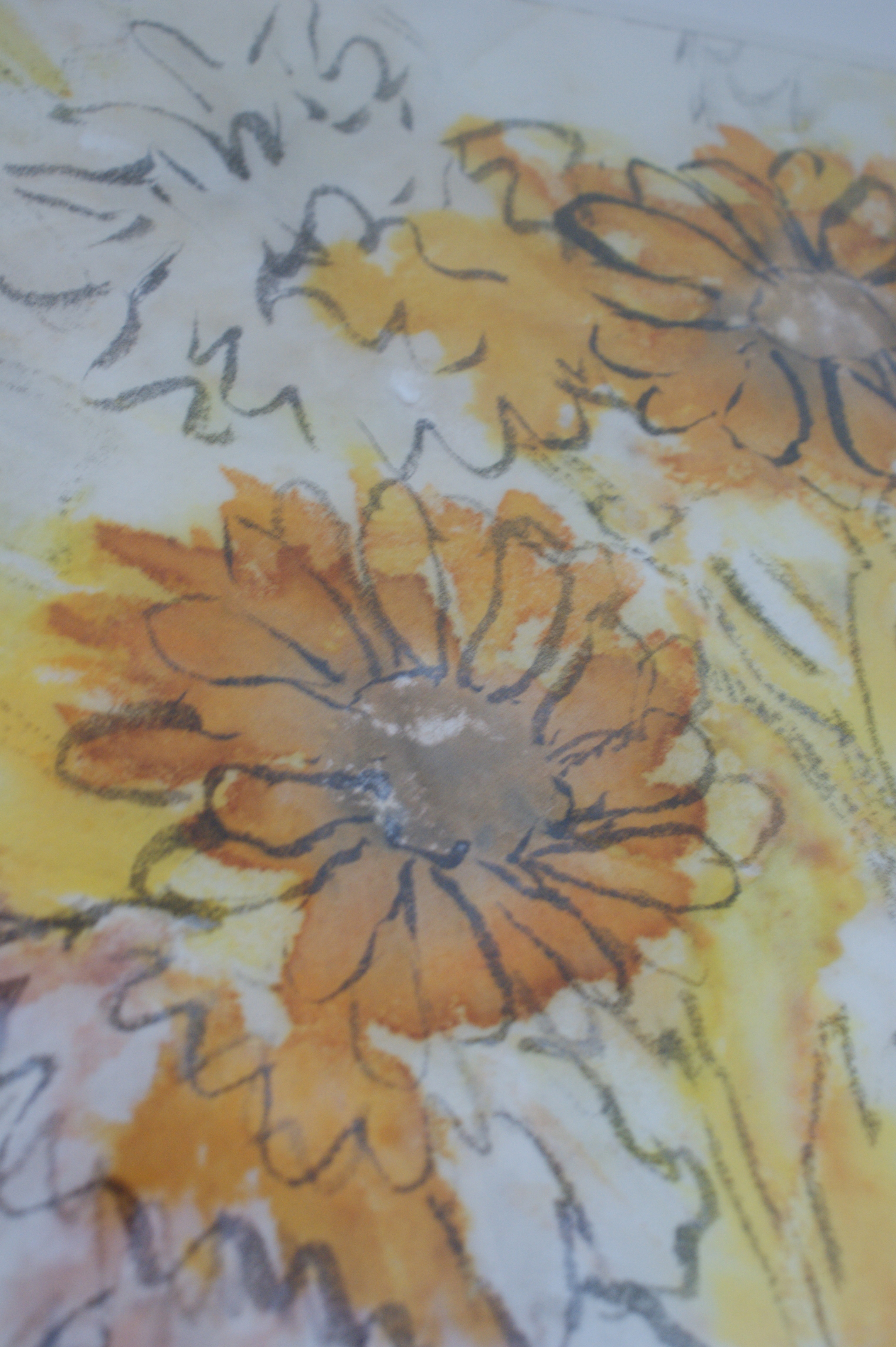
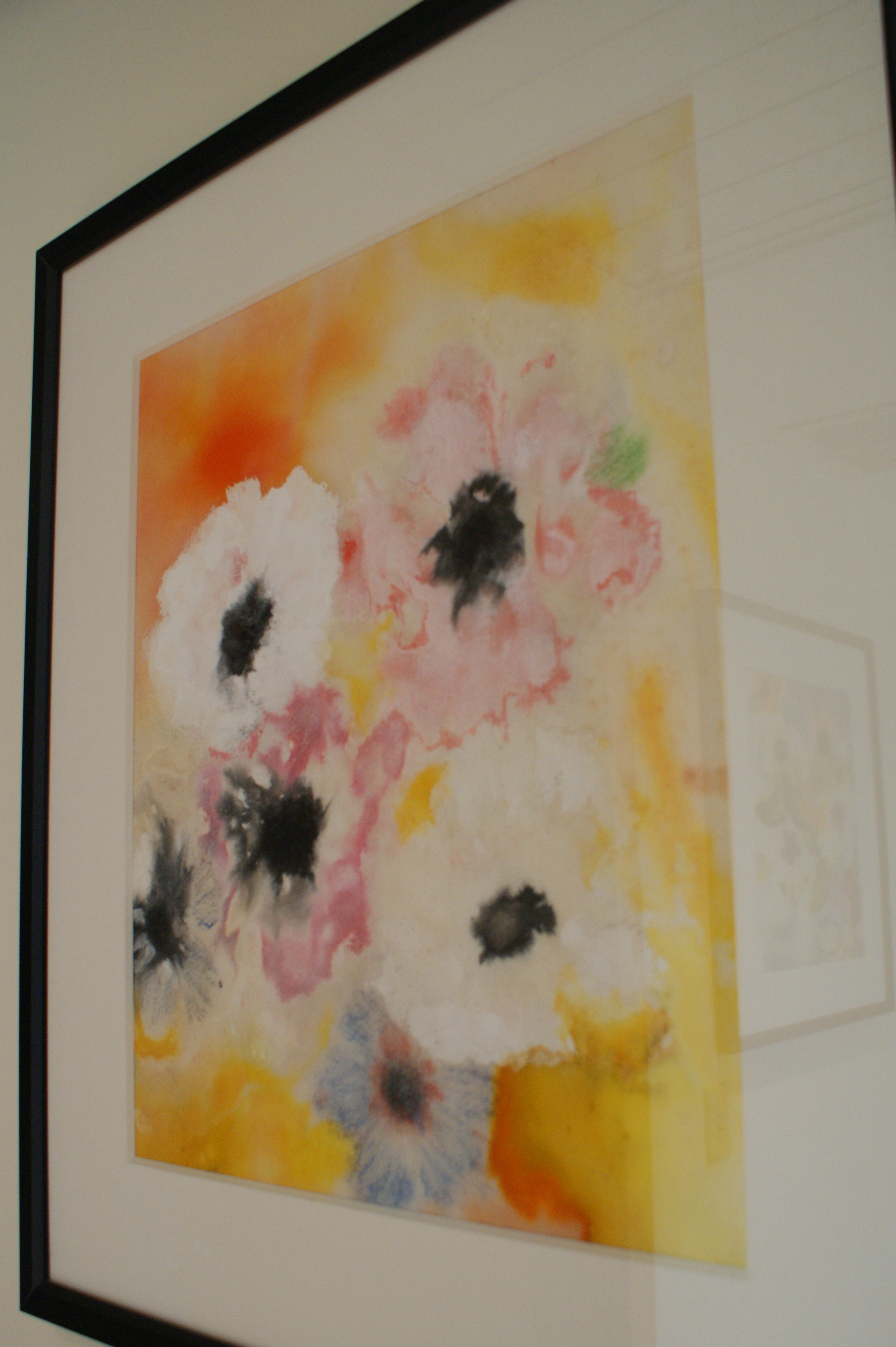
Watching the van one morning I remember thinking, “This is a kind of life I know nothing about.” And later that morning on the train to Boston I recalled my Aunt Billie, who, in a previous generation’s vernacular, “was a little slow.” The family talked about how Billie had gone to some of the same schools as Rosemary Kennedy, a remark whose significance was lost on me at the time. Billie lived with our family for a brief time (a summer, maybe?) during which I worshiped her as she made fabulous art on our dining room table. I was probably 8 or 9, and it never occurred to me to treat her any differently or feel that her faculties were diminished. She made beautiful ink and paint designs on fabric interfacing – gorgeous flowers in vibrant colors that spread deliciously through the fibers. Our mother had them framed and put them up all over the house.
When Aunt Billie died from kidney problems in her late 40s. I was 11 years old and the only one who got to attend the funeral in Philadelphia with my mother, and I was allowed to choose from among her things something to remember her by. I don’t recall seeing any painting among her few things, so I chose a small needlepoint of a butterfly and her clock radio. (In 1974, a clock radio was a big deal.) I knew my connection to Billie was special, but I didn’t much think about how or why. I loved the attention she gave me; she was an artist and I wanted to be one, that was all.
I still have the needlepoint tucked away somewhere, but better yet I now have several of her paintings. A few years ago we were redecorating our upstairs and I decided to have some of them reframed – the faded dark mats and speckled antiqued wood frames were decades out of date and didn’t seem to match the art. At the framers I chose thick white beveled mats and simple black frames, and I asked the framer to remove one painting from the old frame so we could see how it would look when it was finished. It was then that I saw that the previous framers had backed the paintings with brown kraft paper, which, for all these years, had shone through the translucent interfacing and muddied the pigments. When we backed the art with white paper the true colors burst forth.
All of those years, muted and misunderstood, Aunt Billie’s art was there for us to see but not in the colors she had intended. Mom had done her best to give Billie all she needed, a place to live, the tools and a place for her artistic expression, but still the world couldn’t wholly appreciate her gift because she lived and worked on the periphery. And as I grew up I didn’t notice the difference between the bright paintings on the table and the ones muted by the brown paper backing; I don’t think anyone did. By then I knew what it meant to be in the same school as Rosemary Kennedy and had blindly accepted that the margins of society were okay for some kinds of people.
Now the school van comes to my house and the art is by my child, and we are doing everything we can to stay engaged in our community and steer clear of the margins. We go to the public school and advocate for a program that is supportive and inclusive to the greatest and most practical extent. Often it’s difficult – the margins are quiet and there are some people who need the space to be there. But the decision has to be ours; we have the right to choose where we will be happy and how we want to belong. And as we go, we will learn and we will show the people whose vision is obscured by the brown paper how they can remove those old dull perceptions so that they can appreciate what our true colors are.
 I Wouldn't Have Missed It