When they were handing out Christmas Spirit, he got in line twice

We volunteered to throw the class Christmas lunch at our house and found ourselves in major prep mode. The light snow that had been falling all day put us in just the right spirit. When walked into the supermarket they were playing a snappy version of Jingle Bells. Our boy started to bop a little as he walked in time to the music; I did, too. We bumped shoulders a little and headed toward the bakery, bopping together. I was lost in the moment, having fun.

“Hey there!” Busted, dancing in the store, by the mother of a classmate of my daughter – someone I know well enough to be a Facebook friend but not so well that I didn’t feel sheepish. I threw up my hands.

“Okay, you caught us dancing the supermarket! We are modeling good holiday behavior!” He was bopping off without me so I had to move on, but we left her smiling. When I caught up with him he was very busy at a table piled high with Christmas cookies.

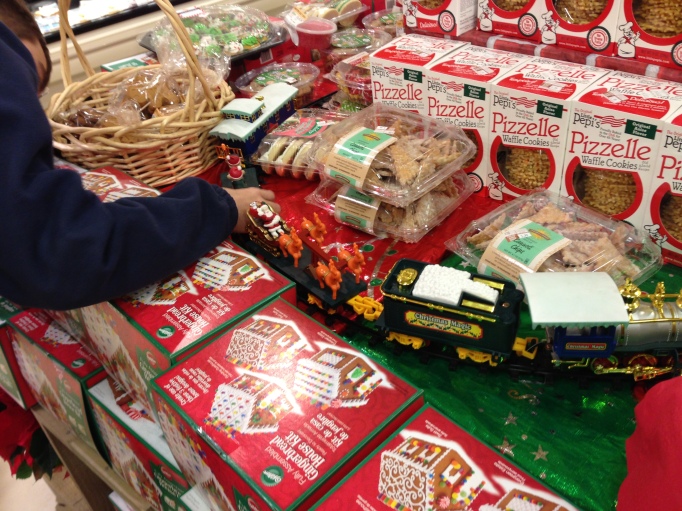
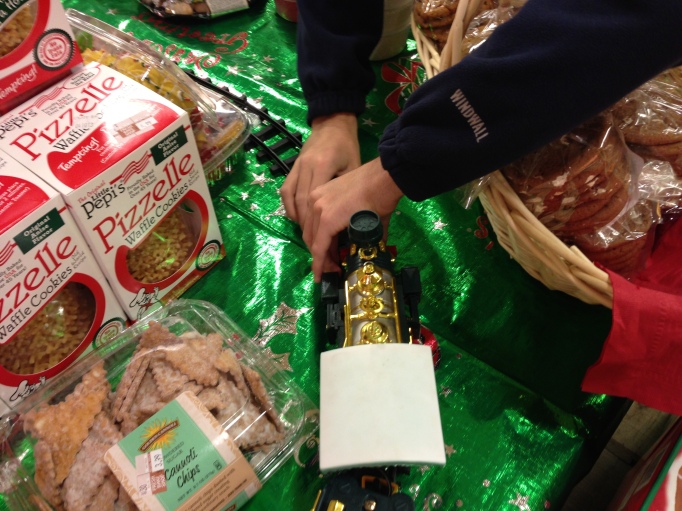
“We have to move these cookies to allow the train to go through!” Among the piles of cookie boxes there was indeed a buried train setup. The cookies were encroaching on the tracks and had dislodged the train from its proper spot. He worked quickly and efficiently, keeping the cookies in neat piles but reorganizing them so they would not interfere with the train setup. He was the spitting image of his father in every wonderful way, so I took a picture to e-mail his traveling Dad and tell him how we’d been caught dancing.

IMG_2924

When I finished sending the mail on my phone I looked up and the teenager who works in the bakery was standing a few feet away, watching us in bewilderment. She had come out from behind the counter to watch us warily and I saw it dawn on her that he was doing a good job, and was improving on what I assumed to be her cookie arrangement.

IMG_2925

He finished up and surveyed his work with folded arms, pleased as punch.

“There! That’s better!” I looked at the girl.

“Is this okay?” I asked.

She nodded slowly, “Oh, yeah.”

And then he was off.

“C’mon Mom, we have to track down that sneaky pizza crust!”

If there is a future in holiday cookie displays, we are in great shape.

Taking Umbrage

I’ve had some brutal conversations recently, and one in particular yesterday left me speechless with indignation. Hard to believe, I know.

But I’m not speechless anymore.

I have been speaking with parents for many years, and in recent months the talk has turned, not surprisingly, to adult transitions for people with disabilities. It’s complicated. The kids are complicated and the system beyond the School District is complicated. There are multiple agencies that providing multiple, sometimes overlapping services. The eligibility criteria – now under revision by the Commonwealth – is maddening, placing undue weight on IQ scores. Kids with scores over 70 get far fewer supports (if any) after age 22 than kids with scores 70 and under. Just like getting typically developing kids into college, parents compare scores and experiences. That score, and how you access the social service system – through the Department of Developmental Services, the Department of Mental Health, Massachusetts Rehabilitation Commission and probably some agencies I don’t even know about yet – affects how we move through the system. We have learned that we can get conflicting answers on what to do and what is available from people working at the same agency. We knew it wouldn’t be easy.

What I did not expect is the juxtaposition of complacence and entitlement that emerged during these conversations. People tell me matter-of-factly that it is futile to negotiate and collaborate with the School District to better target support for a child but they follow it up with the expectation that, come age 22, the Commonwealth should be poised to provide full-time employment opportunities for the student emerging from the system. They are shocked to discover that this is not the case. While, in my experience, the Commonwealth makes no promises, they give the realistic expectation that students may have a chance for part-time work.  People with an IQ under 70 may be eligible for additional support though day programs and group homes, but those with an IQ over 70 will likely get nothing at all, regardless of their ability to access the potential indicated by the score. The difference in what the state provides is determined to some degree by how families access the system and advocate for their disabled young adult. I am only just starting to sift through this information, so don’t quote me on my facts just yet.

The barriers to employment for adults with autism is all over the news, partly because there are so many high functioning autistic people out there that people can see the untapped potential they could bring to the marketplace.  And yet I find myself yet again pushing back against the perception that an autism diagnosis presents some kind of unfair advantage in the school and social service system just because there happen to be so many people with autism coming of age at this point in history. And let’s be clear: they aren’t talking about people with IQs near 70. I find myself apologizing for the fact that my disabled child is the one slated to fall through the safety net because he is autistic – this is the conversation that sent me into orbit. The conversation in which the person whose child will get more support than mine feels cheated because my child is viewed as higher functioning when he is only differently disabled than hers. Is there such a thing as disability envy? Sometimes I think so. Contrary to popular belief, the autism label isn’t opening any doors for us; I’m pretty sure I can hear them closing.

There is no glory in needing or asking for help. There is no greater helplessness than knowing there are limits to what you can do for your disabled child, and knowing that you are going to have to go outside of your family to assure that they get what they need so that they will need you as little as possible as they – and you – get older. We do not want to let them go; sometimes just letting them go to school is tough enough. But one way of making this excruciating process bearable is trying to do things that help more children than just your own. I have said this part many times before: We have tried to advocate for our child with an eye toward building programs that help others like him but also toward building a school system that serves all children well.

But to hear from parents that the teachers are great but that nothing has ever really changed, that a child is not getting this or that even though it’s in the IEP but that’s just the way it is, that the high school is bad at this or the middle school isn’t addressing that, that the Commonwealth is a self-sustaining bureaucracy and nothing more and there’s nothing we can do about it – that just doesn’t match up with my reality.

Our School District has changed and is changing every day. My indignance comes from the sense that people are complaining about things that have been fixed, that our high school is better suited to serve our kids than it was 2 years ago and infinitely better than it was 5 years ago, that education is a partnership that requires communications and work inside and outside of school by all parties involved and that, most importantly, complaining is not the same as advocacy. Things are changing because parents are speaking up in ways that foster change – which doesn’t mean bitching over the phone or in the parking lot. It means calling a meeting when the District is not meeting the terms of the IEP, making sure the IEP addresses the needs of the child, and that the teachers and staff have the time and means to serve the child.
Here's something else we accomplished: we created and funded an Education Resource library for parents and teachers to research specific disabilities.

Here’s something else we accomplished: we created and funded an Education Resource library for parents and teachers to research specific disabilities.

I am driven to distraction by the perception that we can neither penetrate nor change the system and that the progress we have made in recent years in our own schools is invisible. People say to me with a straight face that it is a waste of time for them to try to change things in a school “because it won’t ever happen.” I know that  the improvements to the program that their child is in were not an accident that happened while I was advocating for my own child – I asked for change, lobbied for it, called meetings about it, talked to the School Committee about it, got funding for it. And when other issues were brought to my attention, I did the same thing for programs that my child was not in. There are a lot of us doing a lot of work out here and we can’t take sole credit for that progress but it galls me to discover that some people think that parents and citizens have not fueled and contributed to substantive change at our high and middle schools in the last five years. There is always more work to be done but this is a moment where I feel the need to stand back and appreciate what we have accomplished so far. Within the last few years we have increased all of these supports:

  • therapeutic classrooms
  • school adjustment counselors
  • assistive technology
  • transportation for community inclusion
  • after school opportunities
  • community-school employment partnerships
  • small-group instruction
  • language-based instruction
  • behavioral training and support

And we accomplished it not because my child is has a certain diagnosis but because I – and many parents like me – put in the time and energy to advocate for changes that would make our schools better not just for our kids but the kids who come after ours.

So many parents face bigger hurdles than I do – and some of their hurdles are in my future. They work harder and better to accomplish things I haven’t even dreamed of yet. Whatever work I have done pales in comparison to theirs. I know that we will benefit from their dedication, wisdom, persistence and tenacity and I don’t ever want to them to think I take their work for granted; I am finding out just how many people do.
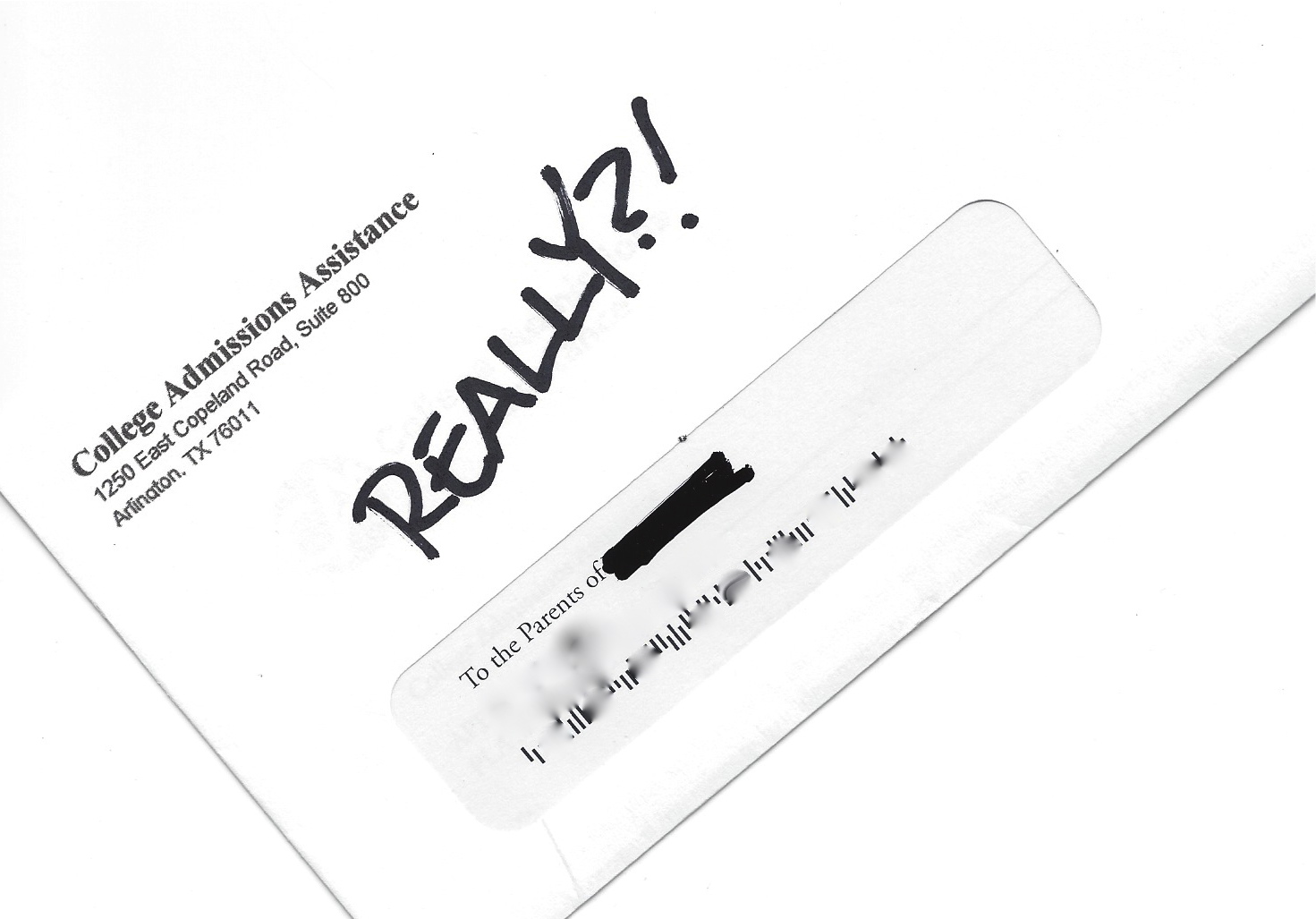
Can Somebody Screen My Mail, Please?

I admit to having moments in which I am thin-skinned. This is one of them. Count it as one thing I am all too happy to miss, for any number of reasons. I know that there is continuing education in our future (where and for what and for how long is anyone’s guess at this point) and that  the college admissions process for typically developing kids is a nightmare. But still. Spare me.

post script

Just as I hit publish, the TV goes on and I hear the familiar strains of “If I Only Had a Brain.” Sense of humor, blessedly intact.

So, How Was Camp?

I wish there was a simple answer to this question.  Was it the right thing to do? Yes. Are we glad we did it? Yes. Did it result in miraculous, instantly recognizable changes? In some of us, yes, but how if affected our boy and how it influences our next moves to plan for his transition to adulthood I am still not prepared to say. We still need to assess his physical health with regard to his diet and digestive system not to mention the dislocated knee (which appears to be fine). We also need to benchmark his academic skills and assess   his social development.  The latter shows greater depth and fluidity, but I can see the potential for him to fall into old patterns with old friends. He seems generally more communicative and more cooperative, though we are still in the glad-to-be-back-home honeymoon period.

Those miraculous, instantly recognizable changes allude to those of us left to fend for ourselves, boyless, at home. My own angst has been clearly documented here, but it must also be said that for all of our hand-wringing the most surprising change was that things here did not change nearly as much as we expected. Special diets, elaborate toy tableaus and the occasional Gerald Mc Boing Boing sounds are not as disruptive to our lives as we may have thought. In our case, the burdens of autism are not nearly as heavy as we were lead to expect – when he was gone we felt more far more emptiness than relief. In earlier years we may have felt it more than we did at this point but I feel the need to point out that the camp experience was more about him being away from us for his benefit, not our need to be without him. Some people really do not understand that. And we do recognize necessity that our other children need to know that his independence as an adult is just as important to us as theirs, which is a point that absolutely must be made with both actions and words. In reality, the hardest part of the camp experiment is that it is so lovely to have him home that we are loathe to think about ever letting him go away again (for the record, he is also perfectly fine with that).

And there’s the rub. The urge to become complacent is, at this early moment, almost irresistible. But we must keep our eye the prize of independence, or whatever measure of it we can hope to achieve. He is vulnerable – we know now that he can endure a lot but we also know that he may be just removed enough cognitively that he might be forced to endure things that he should not. He was in an environment that we knew would not exploit his good nature – where else can we possibly find that outside of home?

So camp, in the end, did not give us as many answers as we might have hoped, but it is making us rethink our questions.

Day 21: Forbidden Fruit Out on the Table

And so begins another week, boyless.We are holding his place for him even as we try to take advantage of being able to do things that it doesn’t make sense to do when he’s home. You never know what you are going to miss, that’s for sure, and you never know what small temporary joys will pop up – like being able to leave a bowl of apples and peaches on the table. Other items are scattered around the kitchen that aren’t typically in plain sight – bananas, french rolls, hot dog buns, home made chocolate chip cookies. He loves them but should not eat them – they cause physically mild but emotionally distressing reactions – but if they are within reach he cannot consistently resist the temptation (kind of like me and chocolate). It almost seems disrespectful to have them laying around; like an open bar to an alcoholic. It’s not that big a deal but it is nice to have the food where I can see it – how many rotten apples, black bananas and moldy breads have I found in drawers, closets and cabinets over the years? I hide the food better from myself than from him much of the time. Often I just don’t buy what he shouldn’t eat but when others in the family request it I think it is important to respect their preferences, too.

The place holding is literal as well as figurative – his seat at the table is marked by two ceramic hearts he made last spring, professing his love of art and of us. I can’t predict how much he will have changed when he gets home, but I am certain that I will be different having gone so long without him. The hearts will prevail, though, that I know.

First Phone Call: Permission to Breathe, Granted

Week two. We have proof now. He is still the same boy we dropped off last week. He is as strong as we knew he was and so much stronger than the school experts – and I use that term loosely – said he could be. He is always capable of throwing us a curve but he will never let us down when it really counts. Everyone who knows him well knew he would rise to the occasion.  The voice is still a little flat, the answers short but sincere, and no discernible traces of angst. He is still wary, still not entirely comfortable with being so far away from home (I see the Scooby Doo he smuggled to camp tucked under his arm now and then, a telltale sign) but he sounds safe and brave and proud. And in the typical role reversal he has given me permission to be braver and prouder than I was a week ago, because I have as much confidence as I have ever had that he feels and is safe. These are rare moments, indeed, for in this world there are few places that provide both haven and meaningful activities for people with developmental delays, and the older they get, the narrower the choices become. So many people are working to expand the options and opportunities for adults with autism and I can see that I will soon be joining them in building a community of which we can all be proud. I still don’t know what it will look like but from the sound of his voice it appears, for the first time, truly possible.

IEP Meeting Prep: Read Differently, Move Deliberately

When preparing for meetings I find myself glued to the computer, doing research, typing notes, reading and organizing old files – mission statements, health care plans, meeting agendas.  I am bushwhacking; managing the jungle of information in front of me in hopes of paving a road for us to walk on, hoping to keep us from falling off of some existential cliff that I imagine is there if we do the wrong thing or miss the wrong cue. My mind and my fingers move so furiously that the rest of me is paralyzed and exhausted.  I don’t want to cook or clean or be social; all I want to do is sleep and prepare, sleep and prepare.  I am a tenacious, insufferable, boring, anxious, obsessed stick in the mud.  On-screen diversions – Facebook, The Times – don’t count because they are filled with reminders of the task at hand and then tend to divert in the wrong direction.

But I was prompted last week by a parent wiser and stronger than I, that motion – physical, heart-rate elevating motion – is necessary to calm the psychic storm that comes with these moments of transition.  She faces some of the same issues I do and she is making herself run; I will have to be content to walk, but I will do that and whatever else I can to get out into the daylight.  I will take a walk, get my hair cut, and go to the hardware store and get things that have been languishing on my list for weeks.

The last time we were retooling at home and school like this, the same novel sat on my nightstand for three years, unopened, collecting dust.  By the time I got around to picking it up I was so tired of looking at it I gave it away instead of reading it.  The moment had passed.  I don’t even recall what book it was; I only remember that moment of picking it up at all is that it happened when I was talking on the phone to my cousin who was dying of cancer at the time.  We were talking about things left undone and I mentioned the book that was sitting there, and she told me how she had managed to pare down her life to only the essentials and divested herself of the distractions of television, newspaper and computer.  At that moment I realized that there would always be something better to read than that book.

Now the books – good ones this time! – are piling up again (sorry, Walter Issacson, William Trevor, David McCullough) but at least I am learning to make it mostly non-fiction or short fiction.  I must finish it before bed or  know how it turns out.  I am interested in knowing about the journeys of all kinds of people in the 20th century, and so the book that rescues me today is Sidney Lumet’s Making Movies.  I’ve seen so many of the movies he made and he writes so easily and compellingly about the process of film making that it gives me something that is both easy jump into and easy to let go of when my attention is diverted, as it so often is at these times.  At this moment, it is the right mix of nostalgia, entertainment, and clarity of process that makes me happy and still keeps me learning.

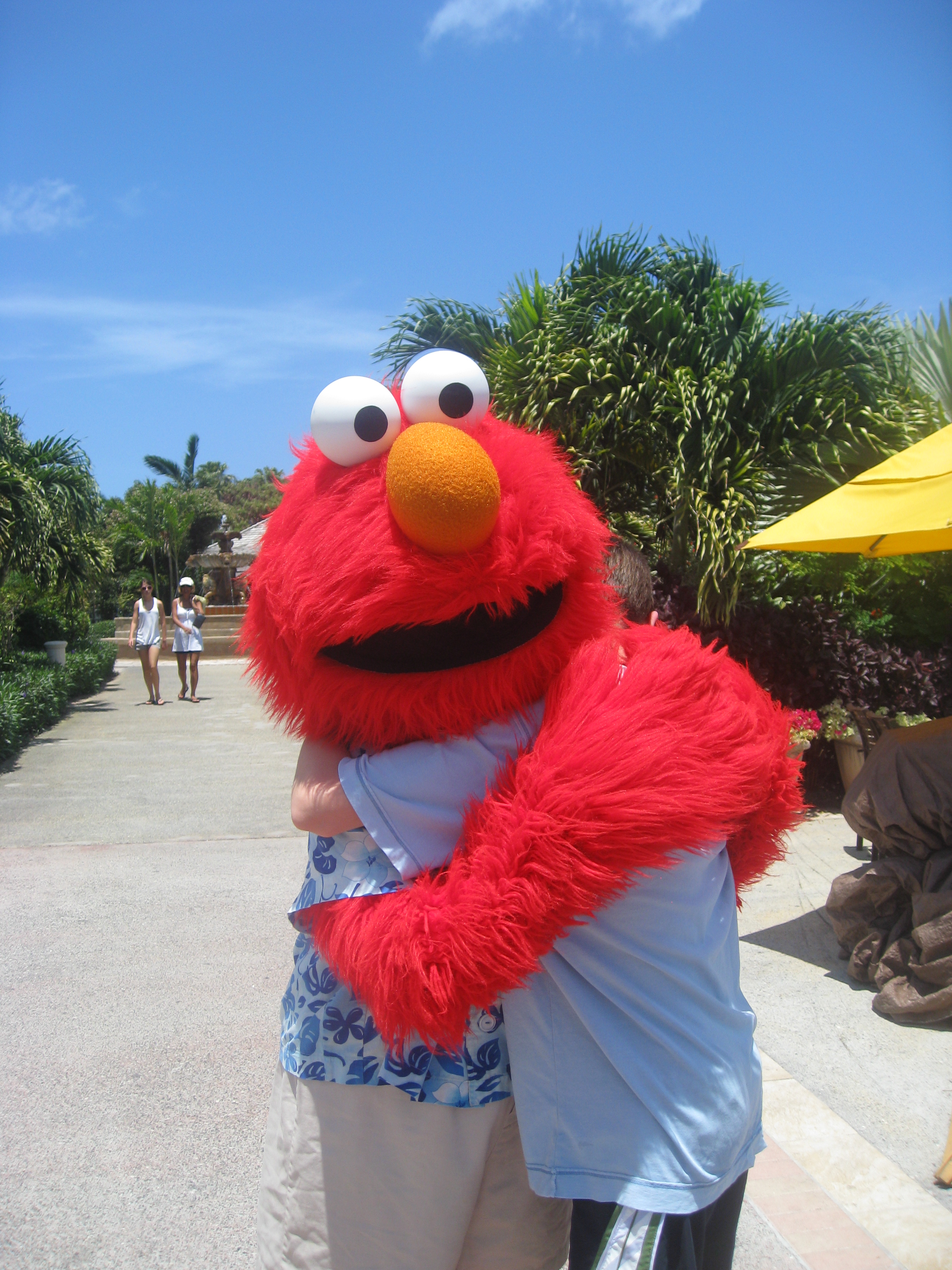
Hug Me Elmo.

This is from a couple of years ago and it is a sweet photo but at this moment it is an example of all I want to overcome.  Now, suddenly, as adulthood looms for real, the endearing photo of a birthday hug from Elmo only tells me that we need to do more to make the adult world accessible and palatable – no, joyful – to our boy.  Adulthood is daunting to all of us, so how do we differentiate childlike from childish, nurturing from insulation, love from coddling, wisdom from denial, bravery from cruelty?  The lines between all of these things shift on me, all day, every day.

The Pledge

Earlier this week our boy was asked to help lead the Pledge of Allegiance at the opening of a School Committee meeting.  He’s done this once before; this time the was filling for another boy, who could not make it at the last minute.  I asked what happened to his friend, and to my surprise my son answered, “I think he is too shy.”  Here he was, someone who struggles with his own anxiety every day, recognizing it in someone else and willingly stepping in to help.  Add to this his cheerful acquiescence to the immediate nature of the request – we had to just hop in the car and go – and the evening was already extraordinary in that it was so very ordinary.  He sat quietly in the back of the school library as people filed in and I chatted with the Superintendent.  He greeted former teachers and administrators who made their way over to see him.  He was a little distracted, and little awkward, but composed and charming in his way.  He was prepared.  He and his classmate beamed as the Superintendent introduced them; his hand fluttered ever so slightly as it made its way up to his heart and they led the Pledge.  School Committee meetings are televised; he looked straight into the camera, fully cognizant of the moment.  Everything went perfectly.

And then a member of the Committee rose from his seat and strode over to shake each boy’s hand, warmly and sincerely.  I was struck by the authenticity of this gesture and how it underscores my hope for us as a community.  Recently I have been agonizing about how inclusion for behaviorally challenged kids can really work in a high school setting.  At this age it is much harder to accommodate the differences in learning and socialization; there is so much to prepare for in life that successful behavior in the classroom setting just doesn’t seem like an important goal anymore.  Having spent all of these years trying to make kids successful in the school setting, now our attention necessarily turns to life outside of the school building and in the larger community.  So many people are worried about how their college graduates will get jobs; in this economy the odds are doubly stacked against those for whom an advanced degree is not in the offing.  But these small moments – a public appearance, greeting teachers and friends, a handshake from a leader – they change everyone’s lives.  I’m glad that, against the odds, we have stayed in public schools and that we have taken on what is sure to be a battle for the resources that will allow our boy the training and education he needs to be successful outside of the classroom.  I have always believed that everyone can benefit from what we teach our children with disabilities because it gives them a chance to teach us in return.  Inclusion comes in many forms, not just in the school but in the community, and it means we not only have them in attendance but we recognize that they are there and that what they have to teach is worth knowing.  I was starting to think that it was just talk, that our efforts will result in little more than the minimum required.  And then someone got up and shook his hand and I realized how much more is within our reach.

The Blood Knows Where to Go

Last November, I read an article in the New York Times about the alarming number of people with developmental disabilities who die unexplained deaths while in state custody.  I couldn’t finish it through my tears.  The previous weeks had been largely devoted to transition planning and cognitive testing for our teenaged son, so my worries about his future were already close to the surface.  I usually am better at keeping a lid on my anxiety on the long term issues; I don’t think it’s fair to my other children to let autism dominate the family dialogue any more than it already does.  So after my decidedly lid-off response to the article, I went up to take a shower, which always helps me regain my equilibrium.

In my extremely nearsighted state I fumbled with the new razor I took with me into the shower, and nicked a bit of skin off of one of the knuckles on my left hand.  It bled a little bit but for what seemed like a long time, and I stood there in the steaming water, watching it channel through grooves in my skin, run off the side of my hand and disappear in the cascading water.  Maybe this is why people cut themselves, I thought, understanding for the first time why anyone would do such a thing.  The bracing clarity of pain and the fascination with flowing blood make other troubles fade, if only for a moment.  Having drawn blood, your instincts take over and stopping the flow becomes your only goal.   There’s a strange kind of release (adrenaline, I guess) in that kind of single-mindedness, especially when the pursuit of multiple goals is what is making you crazy.  I thought of my worries running down the drain with the hot water, and how what is terrifying in one moment can seem perfectly manageable in the next.

I haven’t been tempted to capture that feeling again in that way, but I understand better now the value of tackling challenges one at a time and setting short term goals rather than taking on the entire future at once.  And perhaps I should be a little more selective about what I read in the paper, and when.