Is it easier to blame Autism than Guns?

John 11:35 Jesus wept.

John 11:35 Jesus wept.

I don’t want to but I have to weigh in on the Sandy Hook tragedy. I doubt we will ever truly know everything that led that young man to do what he did, but I feel the need to reiterate what the Autism Society of America has already said: that mass murder is not a symptom or a behavior of autism. His brother mentioning autism in a description of the gunman doesn’t mean there is a causal relationship between what happened and the alleged diagnosis of autism, it only means – maybe – that he was a person who may have needed more support than he was getting. In today’s America, that could describe a whole lot of people, the vast majority of whom have not opened fire on anyone.

But I am appalled that the ability to do just that – open fire – on anyone, anywhere, is seen as a founding-fathers-given right to Americans. We have lost our understanding of what gun safety is and the value of a good background check – which in this case would have done little good, but that is not true of some other events in this year of seven (yes, seven) mass shootings. But limiting the number and type of weapons available to a single individual might have made a difference in the scope and horror of this event.

Don’t let the media – or anyone else – turn the tables on the real issue and blame a disability instead of political cowardice on the fronts of health insurance and gun safety. I join the chorus of voices calling for increased gun safety and a stronger mental health safety net for all Americans.

SONY DSC

Taking Umbrage

I’ve had some brutal conversations recently, and one in particular yesterday left me speechless with indignation. Hard to believe, I know.

But I’m not speechless anymore.

I have been speaking with parents for many years, and in recent months the talk has turned, not surprisingly, to adult transitions for people with disabilities. It’s complicated. The kids are complicated and the system beyond the School District is complicated. There are multiple agencies that providing multiple, sometimes overlapping services. The eligibility criteria – now under revision by the Commonwealth – is maddening, placing undue weight on IQ scores. Kids with scores over 70 get far fewer supports (if any) after age 22 than kids with scores 70 and under. Just like getting typically developing kids into college, parents compare scores and experiences. That score, and how you access the social service system – through the Department of Developmental Services, the Department of Mental Health, Massachusetts Rehabilitation Commission and probably some agencies I don’t even know about yet – affects how we move through the system. We have learned that we can get conflicting answers on what to do and what is available from people working at the same agency. We knew it wouldn’t be easy.

What I did not expect is the juxtaposition of complacence and entitlement that emerged during these conversations. People tell me matter-of-factly that it is futile to negotiate and collaborate with the School District to better target support for a child but they follow it up with the expectation that, come age 22, the Commonwealth should be poised to provide full-time employment opportunities for the student emerging from the system. They are shocked to discover that this is not the case. While, in my experience, the Commonwealth makes no promises, they give the realistic expectation that students may have a chance for part-time work.  People with an IQ under 70 may be eligible for additional support though day programs and group homes, but those with an IQ over 70 will likely get nothing at all, regardless of their ability to access the potential indicated by the score. The difference in what the state provides is determined to some degree by how families access the system and advocate for their disabled young adult. I am only just starting to sift through this information, so don’t quote me on my facts just yet.

The barriers to employment for adults with autism is all over the news, partly because there are so many high functioning autistic people out there that people can see the untapped potential they could bring to the marketplace.  And yet I find myself yet again pushing back against the perception that an autism diagnosis presents some kind of unfair advantage in the school and social service system just because there happen to be so many people with autism coming of age at this point in history. And let’s be clear: they aren’t talking about people with IQs near 70. I find myself apologizing for the fact that my disabled child is the one slated to fall through the safety net because he is autistic – this is the conversation that sent me into orbit. The conversation in which the person whose child will get more support than mine feels cheated because my child is viewed as higher functioning when he is only differently disabled than hers. Is there such a thing as disability envy? Sometimes I think so. Contrary to popular belief, the autism label isn’t opening any doors for us; I’m pretty sure I can hear them closing.

There is no glory in needing or asking for help. There is no greater helplessness than knowing there are limits to what you can do for your disabled child, and knowing that you are going to have to go outside of your family to assure that they get what they need so that they will need you as little as possible as they – and you – get older. We do not want to let them go; sometimes just letting them go to school is tough enough. But one way of making this excruciating process bearable is trying to do things that help more children than just your own. I have said this part many times before: We have tried to advocate for our child with an eye toward building programs that help others like him but also toward building a school system that serves all children well.

But to hear from parents that the teachers are great but that nothing has ever really changed, that a child is not getting this or that even though it’s in the IEP but that’s just the way it is, that the high school is bad at this or the middle school isn’t addressing that, that the Commonwealth is a self-sustaining bureaucracy and nothing more and there’s nothing we can do about it – that just doesn’t match up with my reality.

Our School District has changed and is changing every day. My indignance comes from the sense that people are complaining about things that have been fixed, that our high school is better suited to serve our kids than it was 2 years ago and infinitely better than it was 5 years ago, that education is a partnership that requires communications and work inside and outside of school by all parties involved and that, most importantly, complaining is not the same as advocacy. Things are changing because parents are speaking up in ways that foster change – which doesn’t mean bitching over the phone or in the parking lot. It means calling a meeting when the District is not meeting the terms of the IEP, making sure the IEP addresses the needs of the child, and that the teachers and staff have the time and means to serve the child.

Here's something else we accomplished: we created and funded an Education Resource library for parents and teachers to research specific disabilities.

Here’s something else we accomplished: we created and funded an Education Resource library for parents and teachers to research specific disabilities.

I am driven to distraction by the perception that we can neither penetrate nor change the system and that the progress we have made in recent years in our own schools is invisible. People say to me with a straight face that it is a waste of time for them to try to change things in a school “because it won’t ever happen.” I know that  the improvements to the program that their child is in were not an accident that happened while I was advocating for my own child – I asked for change, lobbied for it, called meetings about it, talked to the School Committee about it, got funding for it. And when other issues were brought to my attention, I did the same thing for programs that my child was not in. There are a lot of us doing a lot of work out here and we can’t take sole credit for that progress but it galls me to discover that some people think that parents and citizens have not fueled and contributed to substantive change at our high and middle schools in the last five years. There is always more work to be done but this is a moment where I feel the need to stand back and appreciate what we have accomplished so far. Within the last few years we have increased all of these supports:

  • therapeutic classrooms
  • school adjustment counselors
  • assistive technology
  • transportation for community inclusion
  • after school opportunities
  • community-school employment partnerships
  • small-group instruction
  • language-based instruction
  • behavioral training and support

And we accomplished it not because my child is has a certain diagnosis but because I – and many parents like me – put in the time and energy to advocate for changes that would make our schools better not just for our kids but the kids who come after ours.

So many parents face bigger hurdles than I do – and some of their hurdles are in my future. They work harder and better to accomplish things I haven’t even dreamed of yet. Whatever work I have done pales in comparison to theirs. I know that we will benefit from their dedication, wisdom, persistence and tenacity and I don’t ever want to them to think I take their work for granted; I am finding out just how many people do.

Saturday Scooby Snack

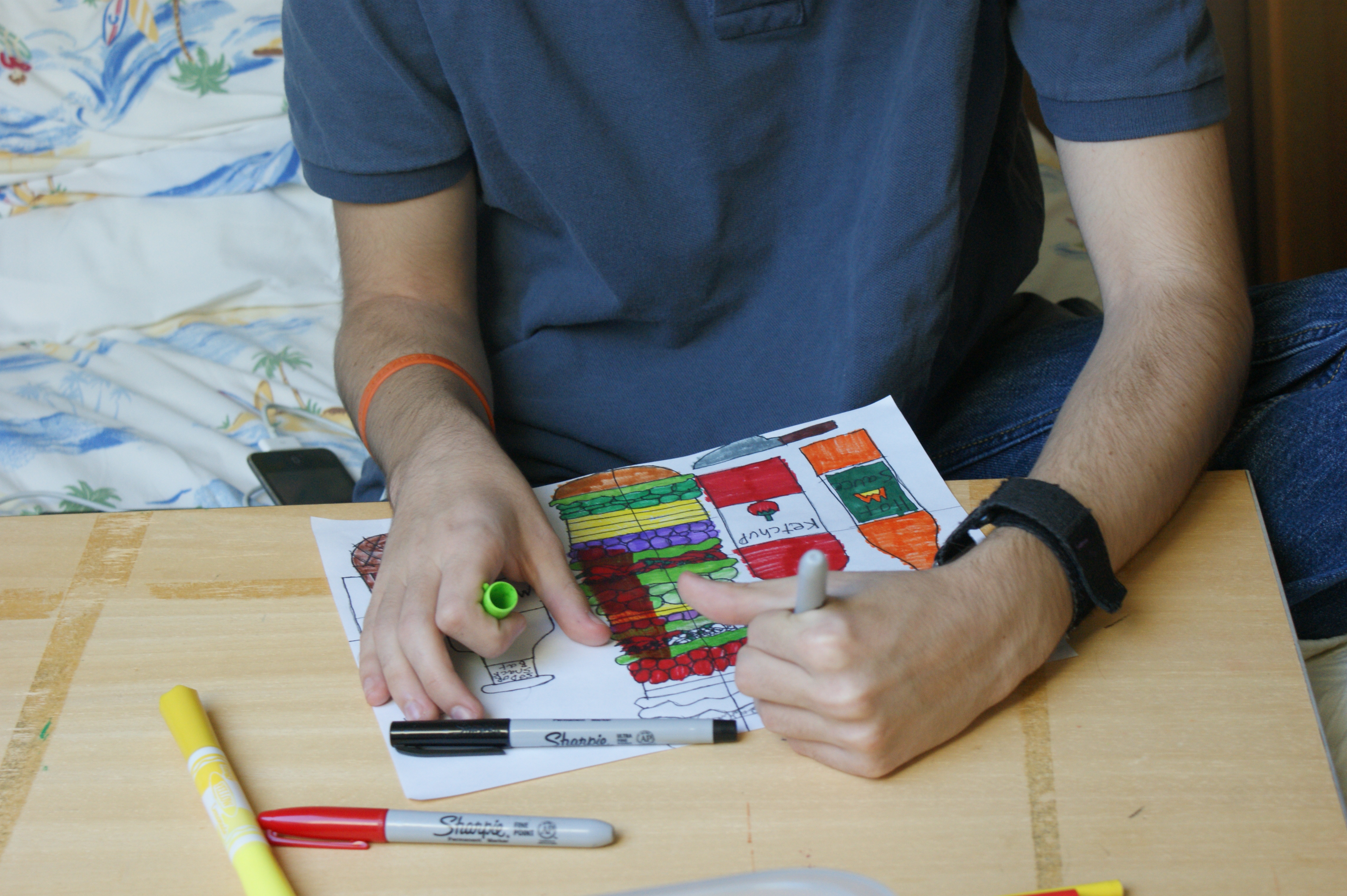
I am still amazed that, of all the Saturday morning cartoons from my childhood, Scooby Doo is the one that endured. How did that happen? Someone pointed out to me that the predicable story line is very appealing to kids on the Autism Spectrum, along with Scooby’s goofy, hyper-expressive non-verbal communication. That still doesn’t explain how it seems to be popular with everyone else (although I laugh every time I see the bumper sticker that says “What Would Scooby Doo?”) Anyway, until today the Scooby thing left me mostly exasperated. And then today, after weeks and weeks and weeks of drawing the Headless Horseman he switched gears today and turned to drawing Scooby Snacks. Happy Thanksgiving.

Autism War Story: PTSD, Enemy Invasion, Friendly Fire, Special Forces and a Bill Cosby Breakfast

PTSD

I really don’t mean to be flip, but at least military veterans suffering from Post Traumatic Stress Disorder (PTSD) don’t have to worry that they will open their front door and find themselves back in Iraq or Afghanistan. I don’t doubt that sometimes they imagine this is true, but it blessedly is not. Studies have shown that parents of children with autism sometimes suffer from PTSD and part of that, I am certain, is that we do indeed find ourselves right back in battles we thought we fought and won years ago. When I open a door – bathroom, bedroom, car, store, or school – I can tell you for sure I don’t know what I will encounter. About 90% of the time all that greets me is sweetness and light, but that other 10% is a real killer. The the invasion is invisible until the collateral damage is done, my boy the innocent victim of a war inside his body and brain.

And it isn’t just a child’s distress that triggers the trauma. Doctors, teachers, social workers – they can suddenly bail on us and make us think that we are crazy. They only half listen to the data, so convinced are they that none of a child’s previous experience is valid as we relive these moments and seek help to solve the problem yet again. Condescension has no expiration date.

Enemy Invasion

So without going into graphic detail, my boy has digestive issues that defy simple explanation but his inexplicably weak immune system leaves him vulnerable to invaders of all kinds. He easily avoids the common cold but his gut manages to attract all sorts of problems. The process of obtaining the necessary samples was what triggered the PTSD for me (but not for him, thankfully) – suffice to say that I had multi-sensory proof that there was something in my son that did not belong there.

We have learned over the years that he does not feel or react to pain in the same way the rest of us do – in 2007, he did not feel the pain of appendicitis until it was nearly too late. So when he came to me a few weeks ago and said his stomach was killing him, we knew it was trouble. He was already on more than one medication to ease digestive discomfort that was diagnosed through tests him telling us he was in pain. Photos showed his stomach muscles tied up in knots, even when it was empty. Feeling we could not wait to track down his specialist, we went to the pediatrician, who ordered tests.

Friendly Fire

When the pediatrician’s office returned my call about test results I was told – by an MD who was not our regular pediatrician – that there was indeed something amiss and that it was treatable but that she was “reluctant to treat it because it is asymptomatic in most people.” Even though the other tests came back fine (whew) and my son who does not feel pain was walking bent over from pain, she determined that it was “risky” to treat it. I said that given his immunodeficiency it was my view that it should be treated, but that I would consult the specialist and she agreed that when I got clearance from him she would write the prescription. I looked up the offender found in his sample on WebMD and even this cursory set of clicks told me that 80% of the people who encounter it suffer from abdominal pain. Asymptomatic in most people … or maybe not.

Lucky for us, the following day that we had a routine neurology appointment at the Lurie Center, a Massachusetts General Hospital-affiliated practice which specializes in serving families with developmental disabilities, and autism in particular. Our gastroenterologist is based there also, so I knew I would at least be able to speak with his nurse. I asked the pediatrician’s office to send our test results there ahead of us. During the drive to the Center my cell phone rang. It was our regular pediatrician calling to confirm that I had heard the test results and to say that they had faxed them to the Lurie Center. I preface this exchange with the fact that we really do love our pediatrician, who, in the past, has been collaborative with us as we navigated our son’s health maze.

He told me, “We really would prefer that you have the Lurie Center write this prescription because, well, it’s very controversial.”

“I think it is a good idea to consult them but I don’t understand why it is controversial to treat the only thing that the tests found wrong with him, especially knowing that he is vulnerable to such things,” I noted.

“Well, we would really prefer that they handle it.”

“I’ll let you know what they say. Thank you for sending the test results.” I hung up, confused and angry. I spent the rest of the drive wondering what I would have done if I didn’t have a team of specialists 30 minutes from our house.

Special Forces

In the context of the neurology appointment, I explained our dilemma and we went over the test results. This wonderful doctor typed up the whole story as we talked, took the test results, and said she would track down our gastroenterologist, who, it should be noted, is so in demand that he is nearly impossible to find on short notice. The man – so delightful in every way, a joy to work with – is a whirling dervish. But the intrepid neurologist returned a mere ten minutes later with marching orders.

“How did you find him so fast?” I asked.

She smiled at me over her half glasses, “It took three hospitals. I never give up. It’s a good thing I did find him. He says to treat immediately because this is known to trigger colitis and once it does it can’t really be reversed.” She called in the prescription for the same medication the pediatrician’s office had demurred on.

Within 48 hours, the pain was gone. Still, based on what I see now I can’t be sure we avoided the colitis, but we’ll have to wait until the treatment is complete.

I have many stories like this one, and I have been reluctant to tell them because they involve arguments with doctors, whom people want to trust, and my winning the argument, which sounds smug and self congratulatory. Also, most of them happened years ago and I didn’t really want to relive those chapters in our lives. I shared our story with Dr. Martha Herbert for her book, The Autism Revolution and told myself that I was done. But here it is, 2012, and we’re living it again. We are still fighting the same battles inside and outside my son’s body. I had begun to think that mainstream medicine was catching up with us, taking the journey with us and developing an understanding of how complicated autism can be. But here we had symptoms, conducted tests and an identified a pathogen and treating it was still considered controversial because my child is autistic. This isn’t even the full story but suffice to say that I shudder to think what might have happened if we had not had a team of specialists (that took me ten years to build, one doctor at a time) to back us up and get to the problem and treat it quickly.

And when the dust settles we will need to rethink the future and life plans in light of the reality that he may never truly be healthy enough to be as independent and high functioning as we know he can be when he feels good.

The Bill Cosby Breakfast

Meanwhile, the rest of my family had not lost their appetite the way I did and were, understandably, interested in eating. By that Friday we were pretty much out of food for breakfast – no bread, no cereal, no time for eggs. My younger boy usually eats whole wheat bread toast with Nutella on it. A quick read of the Nutella label reveals that aside from containing nominal protein it is mostly sugar. I remembered the Bill Cosby routine from the 1980s where he gave his kids chocolate cake for breakfast because it has milk and eggs in it and decided to roll with his logic. I served French Vanilla ice cream for breakfast. Given all of the detailed explaining he had to witness as we helped his brother, it seemed like the least, and most, I could do.


The Nightmare Before Election Day

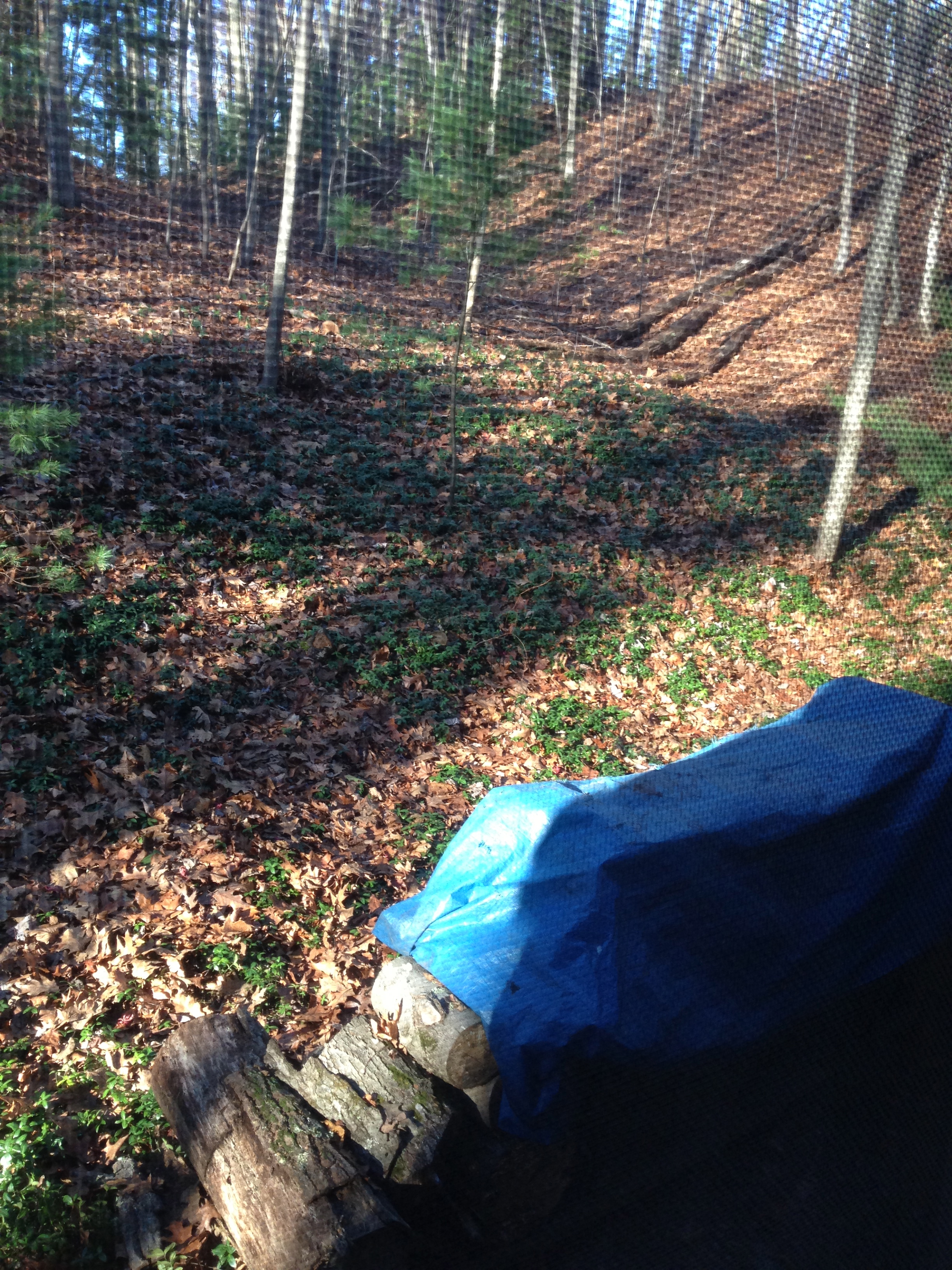
I am standing in the same place this photo was taken. My boy has his back to me, motionless, on this side of the blue-tarped wood pile. On the other side is a grizzly bear on its hind legs, paws up, teeth bared. As I search for a weapon unidentified people around me are telling me not to do anything, that it will be okay, but I keep looking for something to hit it with. Whiffle bat? No. Badminton racket? No. Umbrella? No. I run down to the garage and grab the push broom. I run up the hill and around the house and as I swing the broom over my head the top of the broom flies off and only the stick is left. I see the bear turn toward me, I see my boy turn toward me. I swing.

A Different Kind of Storm

Hurricane Sandy may have passed, but clouds remain on our horizon. I’m not yet ready to post about our boy’s ordeal over the past couple of weeks, but as we stumble through the second day of weather-related school cancellations I see a furrowed brow and a short temper that prompts me to warn my younger son to cut his older brother a wide berth. Other families face much greater challenges from aggression than we, but I am so conflict-averse that even the rough and tumble of typical adolescent boys sets me on edge. We are all off kilter from too much TV storm coverage and howling wind and pouring rain, followed now by creepy cloudy silence and listless lack of routine. We know we are fortunate to have the power on and the trees intact – it wasn’t our turn this time but who knows what the winter will bring now that we have used two of our snow days.

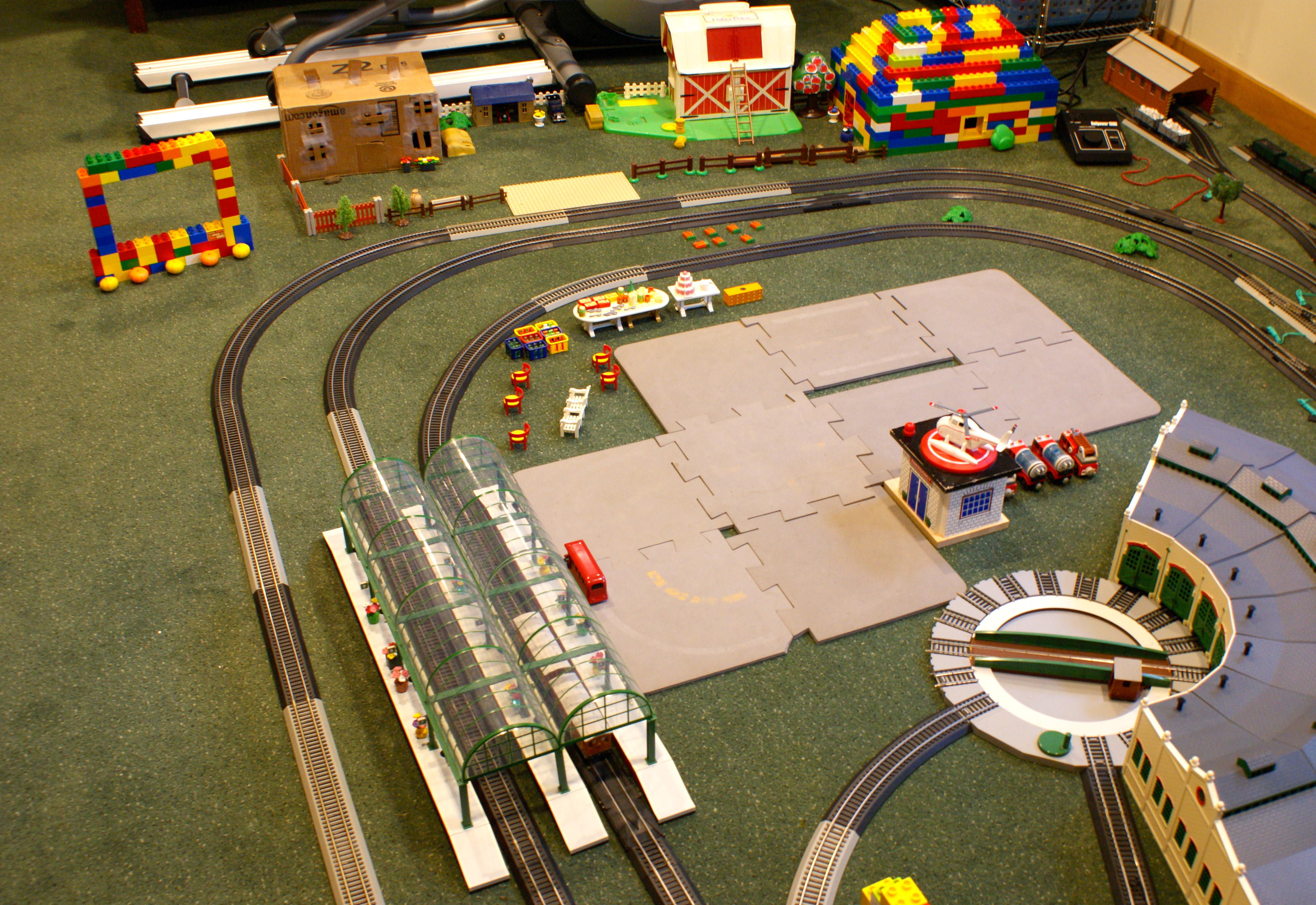
We read on Facebook about some families taking delight in the drama of storm prep and others – the ones with kids on the spectrum – wary of how no power or school might unsettle their kids. We are somewhere between. My boy slept in the basement last night to protect his trains and animals from the perceived threat of the storm – his strong protective instincts run from cutting trees with Dad to carefully tending to his stuff: the Thomas trains stored in their sheds and Playmobil animals in the barns – even the portable DVD player that is the Sodor Drive-in theatre tucked safely away. Camping on the couch in his sleeping bag is part of what makes him such a beast today even though he came upstairs at dawn and finished his rest in our bed after Dad went to work, his feet looking for mine while he fidgeted in his sleep.

And as I write I hear the boys talk in warm tones and the sun emerges to cast a brighter, wintry light on wet fallen leaves and bare branches. The clouds are expected to come and go with maybe one more wallop of rain from the backside of the storm. We’ll proceed cautiously through today and look forward to the routine of tomorrow – which, I now realize, is Halloween. Oh boy.

Who Could Ask for Anything More?

So. It’s a picture perfect autumn day and we are listening to Terry Gross on Fresh Air talk with Michael Feinstein describing his new book/cd about Ira Gershwin. Great program. They play a clip of a radio show in 1933 with Rudy Vallee and George Gershwin chatting with a little piano playing, followed a little later by a second clip of Ethel Merman singing “I Got Rhythm.” Our boy has been next to me in the car the entire time, tapping away on his iPod and soaking up the October sun; it’s been a long day of doctor’s appointments. The Merman recording, Feinstein explains, is from a tribute to George Gershwin that took place just after his death from a brain rumor at age 38. As Merman approaches the bridge in the song – “Who could ask for anything more?” – the boy turns to me and asks,

“Was this right before the Wizard of Oz?”

“I think so!” I reply, but when I get home I look it up because I wasn’t listening that closely. He was right. It was 1937. Oz was released in 1939. The Fresh Air broadcast made no reference to that film or its music but only (and ever so tangentially) to the composers who wrote some of the songs for it – Harold Arlen and Yip Harburg. The only other clues to the era might have been the melodies themselves and the accents – the Brooklyn/Boston/vaudeville kind of patter – both Gershwin and Vallee have voices that sound very much like Ray Bolger, who played the Scarecrow in Oz.

How is it – how is it – that some one who is not supposed to be adept at inferring anything can infer himself right back to 1937 at the sound of a radio broadcast and a familiar accent? Auditory processing deficit? Not today. Fear of music? Not today. Trouble making connections? Not today – at least not at this moment.

During the course of this busy day I jotted down at least a half-dozen moments that are worth writing about, but this is the stunner because it reminds me for the umpteenth time that , in our lives, autism creates so many more opportunities than we give it credit for. They are random, yes, and we don’t always know what to do with them, but they’re there, waiting to be noticed, valued and put into context. It’s kind of like a treasure hunt, every day.

Who could ask for anything more?

Did We Do Something Right?

The lesson learned every day? That we don’t take the blame for what goes wrong and we can’t take credit for what goes right. We tried to accept a long time ago that most of what happens in life is out of our hands – and yet…years of data collection and analysis have forced us to look at evidence and then try to predict outcomes. We are compelled to try and control whatever is within our grasp, no matter how slippery.

So now we have this explosion of language and introspection and creativity and we cannot resist the urge to ask, “Did we do something to make this happen?” Maybe. Somewhere out of the many new situations that life gave our boy, a window opened, a breeze blew through and the seeds of success landed and took root. We created some of the circumstances (camp) and others decidedly not (the loss of JM) but at this moment we see a sense of strengthening purpose and engagement and the hope it brings leaves us blinking in the sunlight.

We know it might not last in its current state – I don’t think we will ever be free from regression. And we all regress sometimes, learning from those same mistakes again and again (Why did I eat that? Why did I say that? Why did I drink so much of that?). But when fundamental skills – like speaking in paragraphs instead of phrases – ebb and flow we find we will do anything to keep that window open and the breezes flowing knowing full well we could wake up one morning to find it closed. The prospect of losing something so hard won triggers every possible human response: hope, fear, optimism, cynicism, love, faith, superstition, luck, magic, and faith – all tempered by what can only be called PTSD. The shock and awe of those early years can return in an instant when he looks at me and his eyes are blank and he is seeing only what is inside his head.

But thinking about it now won’t make it happen – and it won’t fix it when it does – so I will be thankful for the gifts we have today and have faith that they will still be there when we wake up tomorrow.

A Direct Line to Heaven

When our boy was small and we were still trying to figure out what was happening with him, I often said that he was a little closer to heaven and to hell than the rest of us. He was – and is – so much more in touch with his emotions than with the practical world and it magnifies both his joy and his pain in any given situation. As one can imagine, it is a gift and and a curse, but as a parent I place much more value on his gift for presenting vivid, unvarnished snapshots of the most fundamental joys and sorrows in life. This is never clearer than when there has been a death of someone close to him.

He recently lost a classmate to a short, intense battle with leukemia. It all happened while he was at camp, and this turn of events still dominates his re-entry into home and school. He has panic attacks most mornings at school, causing physical and behavioral distress, and we enlisted the help of the school adjustment counselor and the nurse to address his worries.

Earlier this week I met with his teacher and behaviorist who told me that his friend’s parents would be visiting the school to accept a big card that many students from the high school signed honoring their lost classmate.  Leading up to this, our boy was writing down his feelings in a letter to his friend JM and they showed it to me – it was phenomenal, full of apologies for being away while he was sick and a long list of people who miss him. He is really working things through with the counselor, which seems to be making a difference, because he appears to be having fewer the panic attacks. They said that he printed out a photo of JM and drew a gravesite on it. Sometimes he puts his hands on the picture and prays to him (which makes the adults in the classroom cry). When he came home from school that afternoon he sat with me and showed me a bracelet JM’s mother gave him with JM’s name and dates on it. He said that it was good to see his parents and to know that JM’s mom misses him too. I asked him if he cried. He said yes.

We went to the dump that same afternoon and on the way back we passed our church (we do not attend often – singing and crowds, you know) and I told him the church was empty and asked if he wanted to say a prayer for JM. He said yes.

We went in, and I reminded him about the presence of the Holy Spirit and about genuflecting and then helped him say a couple of prayers – he kneeled and held his hands in perfect position; so earnest. I asked if he wanted to go or stay and say some of his own prayers. He said stay. He told JM that he was sorry for missing his funeral and that he hopes he is happy in heaven. Then he closed his eyes, bowed his head and put his hand over his heart and said very quietly,

“In peace. In peace. In peace. In peace.”

It was as transcendent as anything I have ever seen in church. He was quiet for awhile and then said he was ready to leave. I asked him he he felt any better. He said yes.

As we got in the car he said.

“Boy, I really can’t wait for Halloween.”

Why?

“So I can see JM’s ghost!!”

I couldn’t help it, I burst out laughing.

“Was that a funny thing to say?”

I asked him if he thinks ghosts are real.

“Noooo. But I still can’t wait for Halloween.”

I asked him if he knows that I am totally in love with him.

He said yes.