Who Could Ask for Anything More?

So. It’s a picture perfect autumn day and we are listening to Terry Gross on Fresh Air talk with Michael Feinstein describing his new book/cd about Ira Gershwin. Great program. They play a clip of a radio show in 1933 with Rudy Vallee and George Gershwin chatting with a little piano playing, followed a little later by a second clip of Ethel Merman singing “I Got Rhythm.” Our boy has been next to me in the car the entire time, tapping away on his iPod and soaking up the October sun; it’s been a long day of doctor’s appointments. The Merman recording, Feinstein explains, is from a tribute to George Gershwin that took place just after his death from a brain rumor at age 38. As Merman approaches the bridge in the song – “Who could ask for anything more?” – the boy turns to me and asks,

“Was this right before the Wizard of Oz?”

“I think so!” I reply, but when I get home I look it up because I wasn’t listening that closely. He was right. It was 1937. Oz was released in 1939. The Fresh Air broadcast made no reference to that film or its music but only (and ever so tangentially) to the composers who wrote some of the songs for it – Harold Arlen and Yip Harburg. The only other clues to the era might have been the melodies themselves and the accents – the Brooklyn/Boston/vaudeville kind of patter – both Gershwin and Vallee have voices that sound very much like Ray Bolger, who played the Scarecrow in Oz.

How is it – how is it – that some one who is not supposed to be adept at inferring anything can infer himself right back to 1937 at the sound of a radio broadcast and a familiar accent? Auditory processing deficit? Not today. Fear of music? Not today. Trouble making connections? Not today – at least not at this moment.

During the course of this busy day I jotted down at least a half-dozen moments that are worth writing about, but this is the stunner because it reminds me for the umpteenth time that , in our lives, autism creates so many more opportunities than we give it credit for. They are random, yes, and we don’t always know what to do with them, but they’re there, waiting to be noticed, valued and put into context. It’s kind of like a treasure hunt, every day.

Who could ask for anything more?

Did We Do Something Right?

The lesson learned every day? That we don’t take the blame for what goes wrong and we can’t take credit for what goes right. We tried to accept a long time ago that most of what happens in life is out of our hands – and yet…years of data collection and analysis have forced us to look at evidence and then try to predict outcomes. We are compelled to try and control whatever is within our grasp, no matter how slippery.

So now we have this explosion of language and introspection and creativity and we cannot resist the urge to ask, “Did we do something to make this happen?” Maybe. Somewhere out of the many new situations that life gave our boy, a window opened, a breeze blew through and the seeds of success landed and took root. We created some of the circumstances (camp) and others decidedly not (the loss of JM) but at this moment we see a sense of strengthening purpose and engagement and the hope it brings leaves us blinking in the sunlight.

We know it might not last in its current state – I don’t think we will ever be free from regression. And we all regress sometimes, learning from those same mistakes again and again (Why did I eat that? Why did I say that? Why did I drink so much of that?). But when fundamental skills – like speaking in paragraphs instead of phrases – ebb and flow we find we will do anything to keep that window open and the breezes flowing knowing full well we could wake up one morning to find it closed. The prospect of losing something so hard won triggers every possible human response: hope, fear, optimism, cynicism, love, faith, superstition, luck, magic, and faith – all tempered by what can only be called PTSD. The shock and awe of those early years can return in an instant when he looks at me and his eyes are blank and he is seeing only what is inside his head.

But thinking about it now won’t make it happen – and it won’t fix it when it does – so I will be thankful for the gifts we have today and have faith that they will still be there when we wake up tomorrow.

A Direct Line to Heaven

When our boy was small and we were still trying to figure out what was happening with him, I often said that he was a little closer to heaven and to hell than the rest of us. He was – and is – so much more in touch with his emotions than with the practical world and it magnifies both his joy and his pain in any given situation. As one can imagine, it is a gift and and a curse, but as a parent I place much more value on his gift for presenting vivid, unvarnished snapshots of the most fundamental joys and sorrows in life. This is never clearer than when there has been a death of someone close to him.

He recently lost a classmate to a short, intense battle with leukemia. It all happened while he was at camp, and this turn of events still dominates his re-entry into home and school. He has panic attacks most mornings at school, causing physical and behavioral distress, and we enlisted the help of the school adjustment counselor and the nurse to address his worries.

Earlier this week I met with his teacher and behaviorist who told me that his friend’s parents would be visiting the school to accept a big card that many students from the high school signed honoring their lost classmate.  Leading up to this, our boy was writing down his feelings in a letter to his friend JM and they showed it to me – it was phenomenal, full of apologies for being away while he was sick and a long list of people who miss him. He is really working things through with the counselor, which seems to be making a difference, because he appears to be having fewer the panic attacks. They said that he printed out a photo of JM and drew a gravesite on it. Sometimes he puts his hands on the picture and prays to him (which makes the adults in the classroom cry). When he came home from school that afternoon he sat with me and showed me a bracelet JM’s mother gave him with JM’s name and dates on it. He said that it was good to see his parents and to know that JM’s mom misses him too. I asked him if he cried. He said yes.

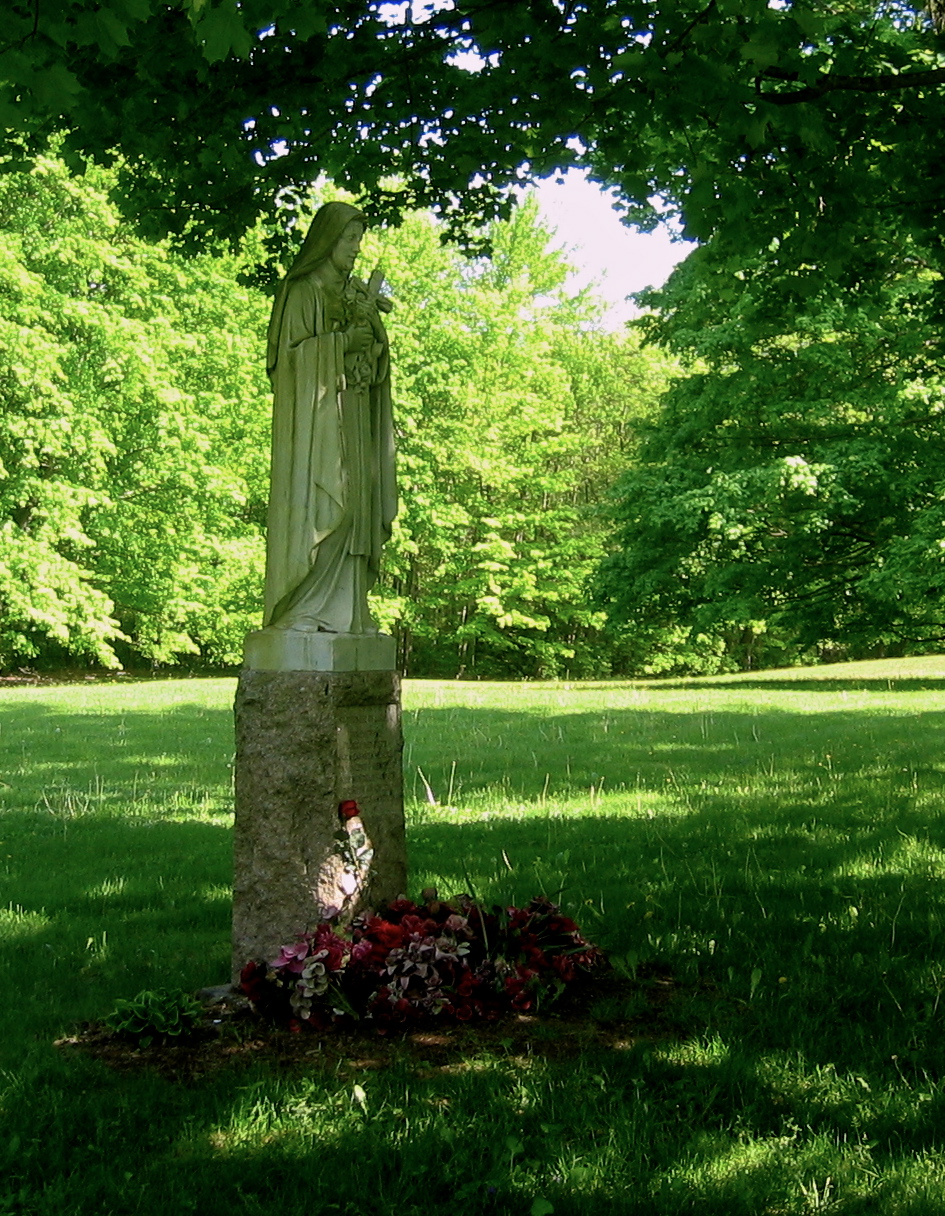
We went to the dump that same afternoon and on the way back we passed our church (we do not attend often – singing and crowds, you know) and I told him the church was empty and asked if he wanted to say a prayer for JM. He said yes.

We went in, and I reminded him about the presence of the Holy Spirit and about genuflecting and then helped him say a couple of prayers – he kneeled and held his hands in perfect position; so earnest. I asked if he wanted to go or stay and say some of his own prayers. He said stay. He told JM that he was sorry for missing his funeral and that he hopes he is happy in heaven. Then he closed his eyes, bowed his head and put his hand over his heart and said very quietly,

“In peace. In peace. In peace. In peace.”

It was as transcendent as anything I have ever seen in church. He was quiet for awhile and then said he was ready to leave. I asked him he he felt any better. He said yes.

As we got in the car he said.

“Boy, I really can’t wait for Halloween.”

Why?

“So I can see JM’s ghost!!”

I couldn’t help it, I burst out laughing.

“Was that a funny thing to say?”

I asked him if he thinks ghosts are real.

“Noooo. But I still can’t wait for Halloween.”

I asked him if he knows that I am totally in love with him.

He said yes.

It Had to be Done: Outgrowing Disney

In the end, we just couldn’t face it. Heat, lines, crowds, food, money. Too much. We’ve done our time in the Land (favorite thing ever: The Casey Junior Train, below) and the World and we figured if we went back we were setting patterns that would be the undoing of us, psychologically and and financially. It was the best decision we ever made, vacation-wise, even with the hurricane. We did not want to spend our few days together in theme park survival mode (and I fully admit that this is my problem, this crowd phobia) and we found a destination where everyone found their own space; in the the water, on the shore, sun and shade, together and apart, quietly. That, in large part, was what this end of summer jaunt was about – all of us developing a better sense of where our limits are and stretching them gently in the right directions, and coming to rest, together, at the end of each day.

It was the first vacation in a long time from which I returned not needing a vacation. Under the best of circumstances vacations can be stressful, and for many families with kids on the spectrum, traveling to unfamiliar territory can be daunting. And while we shy away from overly urban adventures we have still a managed to traverse St. Louis, Washington, D.C., New York and Los Angeles, partly by recognizing that animals and swimming must be on the itinerary.

Life is too short to go to too many of the same places twice. And I have to think that, because we needed to travel for family reasons when our kids were small, the rituals of airports and hotels were ingrained early and we are proud of the way all three of them rise to the occasion, time and again. The fun can bring stress (the TSA, packing special food, meds and myriad devices with their correlating cords, headphones and chargers) but this summer proved at last that sometimes, it’s just fun.

So, How Was Camp?

I wish there was a simple answer to this question.  Was it the right thing to do? Yes. Are we glad we did it? Yes. Did it result in miraculous, instantly recognizable changes? In some of us, yes, but how if affected our boy and how it influences our next moves to plan for his transition to adulthood I am still not prepared to say. We still need to assess his physical health with regard to his diet and digestive system not to mention the dislocated knee (which appears to be fine). We also need to benchmark his academic skills and assess   his social development.  The latter shows greater depth and fluidity, but I can see the potential for him to fall into old patterns with old friends. He seems generally more communicative and more cooperative, though we are still in the glad-to-be-back-home honeymoon period.

Those miraculous, instantly recognizable changes allude to those of us left to fend for ourselves, boyless, at home. My own angst has been clearly documented here, but it must also be said that for all of our hand-wringing the most surprising change was that things here did not change nearly as much as we expected. Special diets, elaborate toy tableaus and the occasional Gerald Mc Boing Boing sounds are not as disruptive to our lives as we may have thought. In our case, the burdens of autism are not nearly as heavy as we were lead to expect – when he was gone we felt more far more emptiness than relief. In earlier years we may have felt it more than we did at this point but I feel the need to point out that the camp experience was more about him being away from us for his benefit, not our need to be without him. Some people really do not understand that. And we do recognize necessity that our other children need to know that his independence as an adult is just as important to us as theirs, which is a point that absolutely must be made with both actions and words. In reality, the hardest part of the camp experiment is that it is so lovely to have him home that we are loathe to think about ever letting him go away again (for the record, he is also perfectly fine with that).

And there’s the rub. The urge to become complacent is, at this early moment, almost irresistible. But we must keep our eye the prize of independence, or whatever measure of it we can hope to achieve. He is vulnerable – we know now that he can endure a lot but we also know that he may be just removed enough cognitively that he might be forced to endure things that he should not. He was in an environment that we knew would not exploit his good nature – where else can we possibly find that outside of home?

So camp, in the end, did not give us as many answers as we might have hoped, but it is making us rethink our questions.

“I can still smell the look of it.”

This was our boy’s observation as we pulled into the drive thru at McDonald’s yesterday. The fast food Mecca is the bane and savior of many an autism parent’s existence. I wish I could say that I took him there only because after 7 weeks of camp he deserved the french fries, but the fact is that after 7 weeks of him at camp plus a college drop-off I craved the Big Mac even more than he did the fries. I knew we would both be sorry in a few hours but we had both been on our best behavior for so long it seemed a minor transgression.

And the phrasing of his remark may not be grammatically correct, but it sums up perfectly the mixed feelings those of us who still go the McDonald’s (oh, come on, you know who you are) have about it – that smell and the very act of pulling up to the window are a sensory memory none of us ever forget. If you have not heard Jim Gaffigan‘s riff on McDonald’s, you owe it yourself to go here.

So, contraband procured, our boy clutched the bag and said, “Shall we wait until we get home?” and then immediately began to eat them – longest ones first. My favorite part (other than the Big Mac) was, as I watched him munch out of the corner of my eye, I asked him to share a fry with me – and, as usual, he gave me the shortest one he could find.

Vacation Revelation

We went straight from camp pickup to vacation; now is the only significant length of time between June and December that we will all be together. There is a lot to process: camp, work and school transitions, the sudden loss of friends and colleagues over the summer. It seems I say in every post that we are learning a lot, but each time I write it I suppose I really mean to say we are learning unexpected things about the twists and turns our lives take, beyond what we have come to expect in the earlier years of raising children and getting older. The more I try to live in the moment, the more these unanticipated  events seem to get in the way.

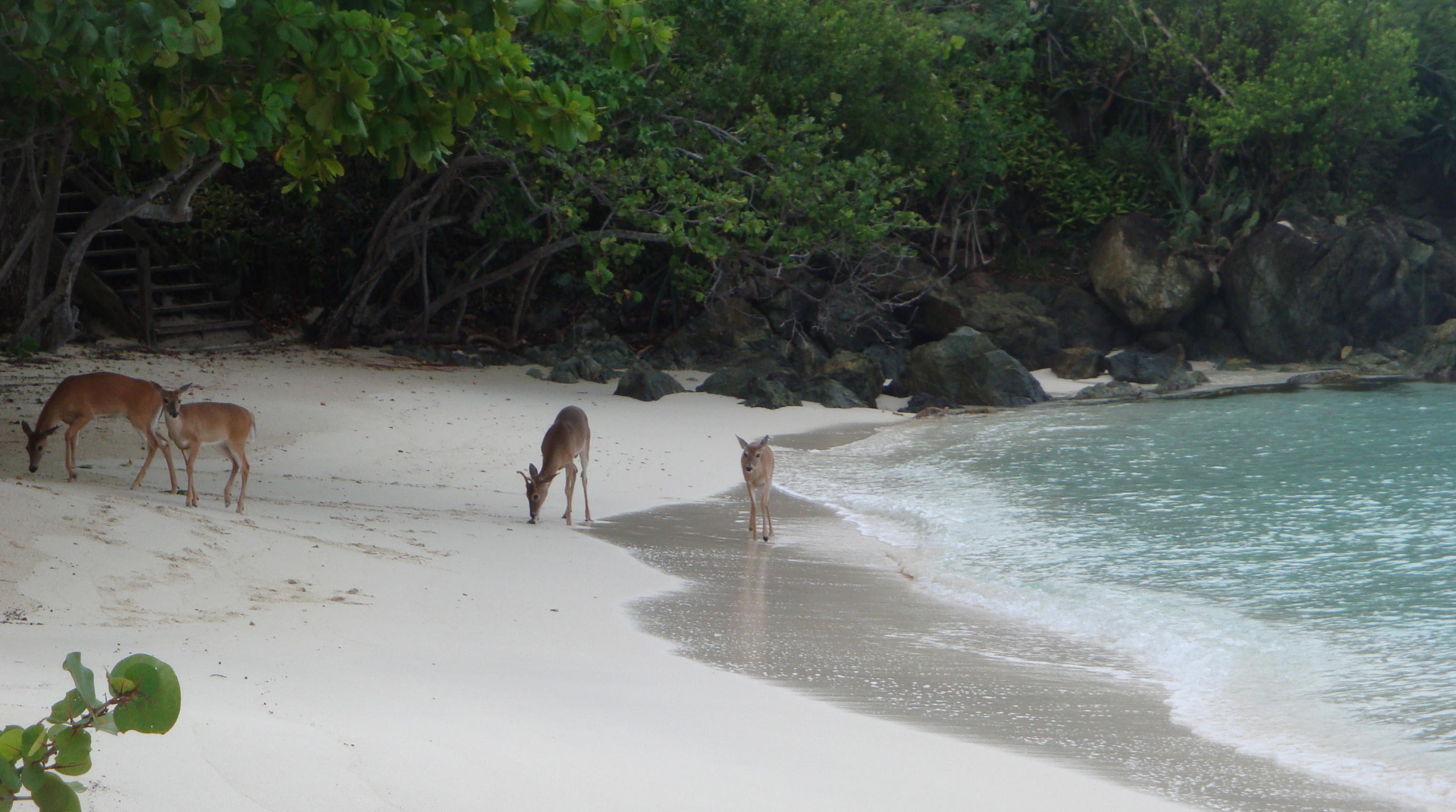
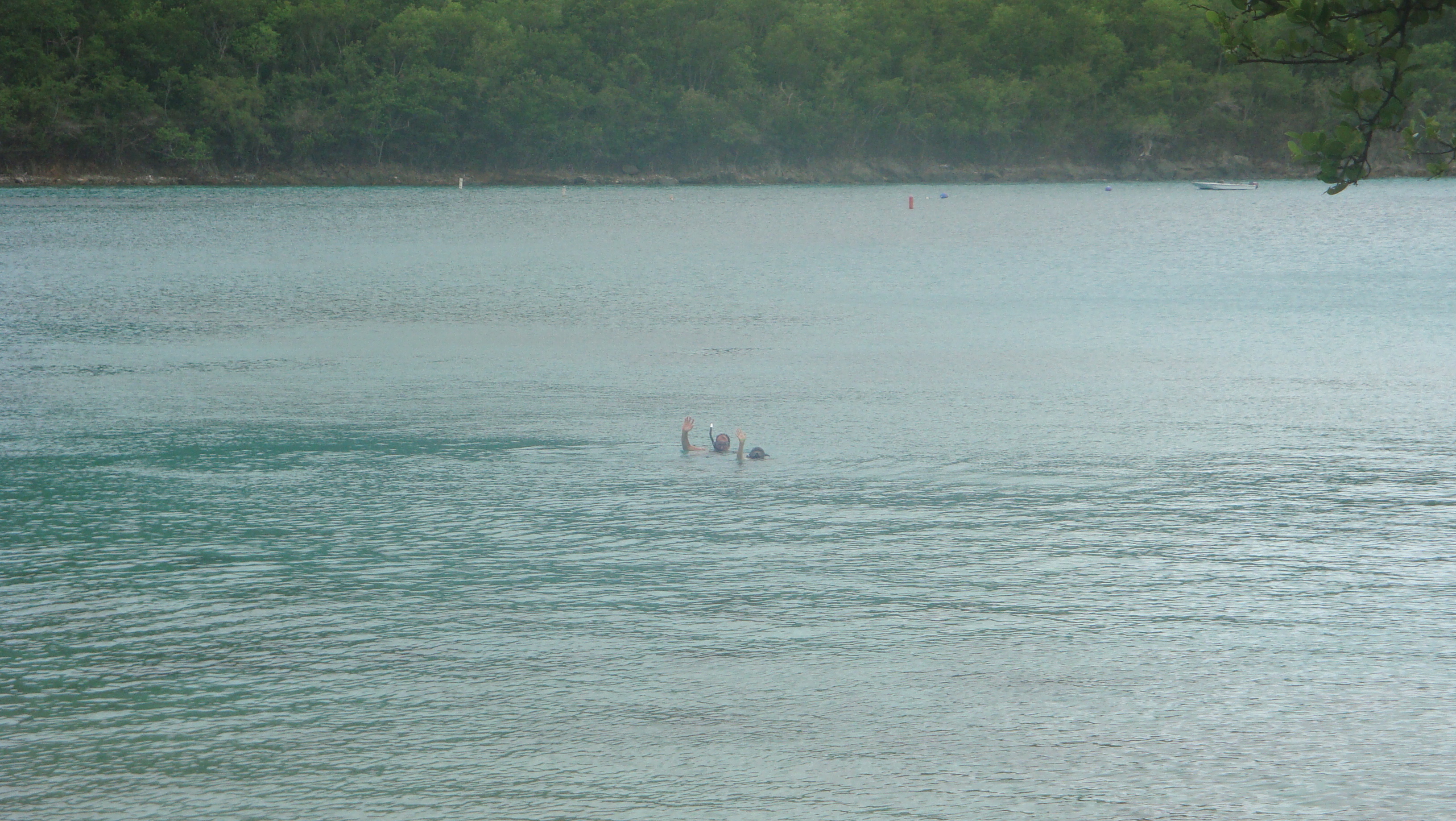
Even as I write a hurricane (Isaac) has popped up out of nowhere to bluster through our trip and set us back a day – it’s causing both excitement and anxiety, but right now the nearly empty beach is populated by just two people, Dad and boy out for a snorkle in a window of late afternoon sunshine between the bands of wind and rain. This is the revelation of the vacation for me. Usually too chicken to snorkel, the calm waters of Caneel Bay convinced me that even I could venture out into the reefs. Much as I am enchanted by graceful sea turtles and spiky urchins down on the sea floor, the most breathtaking sight is the beauty of our boy moving through the ocean. I have always known he is more content under the water than above it, but I never understood the truth of that until now. While I have to remind myself to breathe through the snorkle, he dives and darts down through the water with an ease that astounds. This is a moment I can savor and one I would give him every day if I could.

And when he comes out of the water he rests. And then he talks. And most of words and phrases are his – not scripted or non-sensical. He wants to know more about his friend who died suddenly of leukemia while he was away (we don’t have a lot of answers; we can’t make sense of it, either). He wants to talk about school and home and his sister going to college. The water has cleared the static in his brain and it reminds me a little of Oliver Sacks‘s stories of people who gain clarity and lose it again. Even though the increased fluidity does not last, the gift from the sea is a window into his mind, and I wish and wonder how we could prop it open a bit longer before the storm arrives, passes, and we go home.

The Home Stretch

It’s the last week of camp. I have pored over all of the camp’s photos of our boy and verified that he does look older. We’ve had a phone call and an e-mail over the last few days and I recognize that the flow of communication from him has not evolved as much as we had hoped – the separation did not widely increase the level of detail he provides in letters or over the phone. Still, we know that he is well and happy and we are all anxious to be together again. By any measure the venture has been a success, but the real specifics will be revealed in the coming weeks and months as we observe the re-entry to home and school.

Meanwhile, we have had seven weeks of clear floors, with no trains or set ups of Pride Rock, The Big Harbor, or Playmobil farms and zoos. I had the carpets cleaned yesterday; they are vibrant, soft and beautiful. All prepared for him to come home.

I Left My Sweet Tooth in Upstate New York.

Last weekend I was so hot and so worried I lost 5 pounds and did not even notice until now. Suddenly I’ve lost my taste for sweets.

Week seven underway and we are all tired of our quiet house. I told myself at the outset that I would not spend the summer waiting for the boy to come home, and for the first six weeks I made good on that promise in some ways but not others. I spent time with my other kids doing things they wanted to do and sharing with them new experiences that are interesting to me. I promised to have drinks with lots of people to help pass the time but I didn’t make good on that one. I said I would sort through his drawings and keep the best ones, but I can’t go anywhere near that mountain of paper with any kind of gusto and certainly not a shredder.

But the biggest elephant in the room right now is that this adventure is supposed to prepare us for more separations in the future, and even though I should feel better about age 22 now than I did, I still can’t envision a life without this person under my roof. We were not prepared for the scale or the depth of the adjustment at home; the house is neater, cooking is simpler, and car rides are quieter, but nothing is better without him here (which is not at all surprising). I have to remind myself that this particular kind of absence isn’t what camp was about – that long distances and separation over several weeks is not the model we are shooting for, that camp is only an experiment and not a template for his adult life.

We still have lots of data to collect before we really know what we have learned, and the surprise at this point is that most of the learning has been about ourselves and not him. But a few things are certain – we are all stronger, smarter and better prepared for the next steps we take toward independence, and that we still need to address what independence really means within the structure of a family.

The Visit: Longest and Shortest Day of My Life.

We went. We visited. We came home.

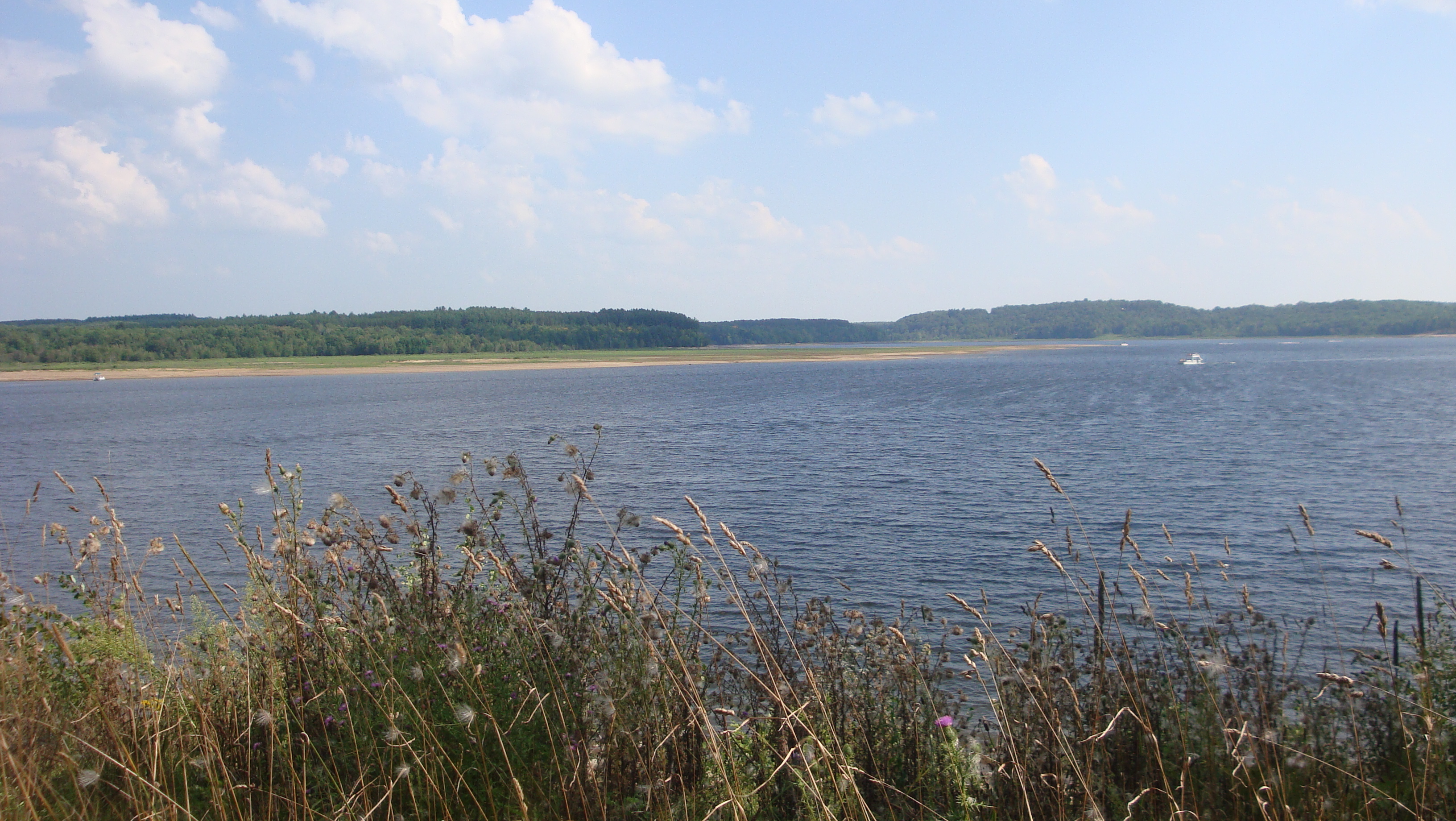
We got the best hugs ever and spent much of the day just soaking up the feeling of being together again. It was hot and humid and so group activities where we could socialize and learn more about camp just seemed impossible – we strolled off in search of a breeze and found it on a hill overlooking the lake.

One look at his cabin made me feel so proud of our boy – living in close quarters in that heat (lots of fans) for so long would test the best of us. And of course this is no ordinary group of boys. They are quirky and sometimes challenging kids, and fortunately the counselors are young men with good hearts and lots of energy. It is clear that he copes by drawing  – the walls next to his bunk are plastered with art in which every part of the paper is colored. Our girl found a little note written on the wall next to his pillow: “6 weeks can take forever and all summer.” At that moment it was hard not to whisk him to the car and bring him home, until I asked him what he missed most. He looked wistfully away and sighed. “Wireless internet.” Okay, he can stay.

And the reality is that he showed us he has the tools to stick it out for another couple weeks, and do so happily. His knee is great, he is taller (I think), more muscular (for sure), and much more self sufficient. He swims twice a day and has learned to water ski. He got and wrote some terrific letters; there’s an impressive pile of them next to his bunk. I am overwhelmed at the generosity of all of the friends and family who make the effort to write to him and send him care packages. It is an unexpected blessing of this whole enterprise that so many people would take the time from summer work and travel to think of him – he got packages and postcards from Europe, Ohio and California representing family, friends and teachers he has known at every age all the way back to preschool.

Our world – his world – is bigger than we thought. That alone is worth the price of separation.